


James Del Rosso, DO, explored the treatment landscape and the importance of regular eye exams for patients with AD.
James Del Rosso, DO, explored the treatment landscape and the importance of regular eye exams for patients with AD.
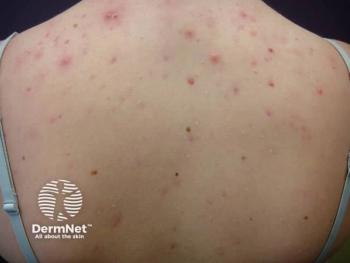
As a part of his presentation at Winter Clinical Miami, Del Rosso discussed new and emerging therapies for acne vulgaris.
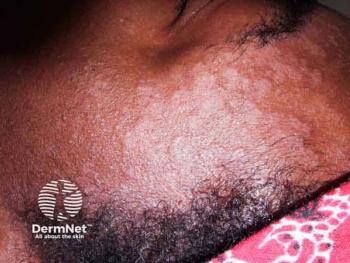
James Del Rosso, DO, shared insights on existing and upcoming therapies for seborrheic dermatitis.
In his presentation at Winter Clinical Miami, Del Rosso covered new and emerging therapies as well as successful off-label uses.
Del Rosso reviews available and upcoming monoclonal antibodies, including nemolizumab, lebrikizumab, bimekizumab, and more.
Del Rosso reviews numerous new and upcoming topical therapeutics and indications including ruxolitinib, tapinarof, and more.

Del Rosso’s cases emphasized the importance of thorough patient evaluation and communication with other health care providers.
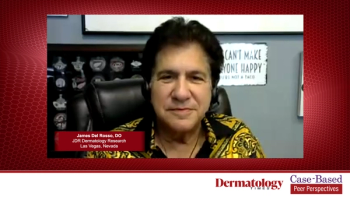
James Del Rosso, DO, continues the discussion on managing acne in a female patient, emphasizing how to balance patient expectations and optimize skincare regimens, particularly when underlying conditions like polycystic ovarian syndrome are present.
An acne management expert discusses the importance of understanding patients' dietary choices on treatment outcomes, reviewing the different types of isotretinoin and highlighting the crucial role of micronized or food-independent formulations in effective acne care.

A 5-expert panel continues their conversation on atopic dermatitis, discussing patient-centered care and key takeaways.
A 5-expert panel continues their conversation on atopic dermatitis, exploring beyond steroids and addressing unmet needs.
A 5-expert panel delves into atopic dermatitis guidelines and recommendations and recent studies to make note of.

Lisa Swanson, MD, FAAD, sheds light on the enhanced accessibility of ruxolitinib cream, highlighting its improved availability for patients in need.
Brad Glick, DO, MPH, FAAD, notes the absence of location restrictions with topical ruxolitinib cream, distinguishing it from topical corticosteroids. The panel discusses the cyclic pattern of steroid use and the potential of ruxolitinib cream as a continuous treatment option.
Dermatology experts evaluate topical ruxolitinib cream's effectiveness in rapidly relieving itch and offer guidance on its black box warning. They also discuss its efficacy in children under 2, highlighting its suitability for those with tactile sensitivity.
Dr James Del Rosso underscores the importance of phase 2 and dose-ranging studies to uncover efficacy differences between therapies, while the panel explores how clinical data from ruxolitinib trials mirrors real-world outcomes.
James Del Rosso, DO, Brad Glick, DO, MPH, FAAD, and Lisa Swanson, MD, FAAD, address the demand for non-steroidal treatment alternatives while navigating the individualization of data interpretation regarding these treatments.

The American Acne and Rosacea Society welcomed Del Rosso as its new president and he shared key takeaways from his AAD sessions.
Experts discuss enhancing patient outcomes, comparing clobetasol cream concentrations, and more.
Experts discuss enhancing patient outcomes, topical formulations and epidermal barrier dysfunction, and more.
Experts discuss enhancing patient outcomes, the "mounting mutiny" against topicals, and more.

One of the many minds behind innovative Fall Clinical Dermatology sessions gives a sneak peek of the top 5 things to look forward to during this year's meeting.
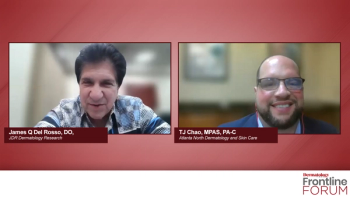
Experts in dermatology share their insights on how to approach corticosteroid hesitancy in their dermatology patient populations.
Experts in dermatology discuss their considerations for atopic dermatitis and plaque psoriasis topical treatment options highlighting the different penetration, access, and safety considerations.
James Q Del Rosso, DO and TJ Chao, MPAS, PA-C comment on the practical aspects of utilizing topical corticosteroids, including potency, formulation, administration, and utility.
James Q Del Rosso, DO and TJ Chao, MPAS, PA-C discuss the role of topical agents in the management of dermatological conditions reviewing their position and role within the treatment landscape for dermatological conditions.

In the final part of this Frontline Forum series, James Del Rosso, DO; Hilary Baldwin, MD; Neal Bhatia, MD; Christopher Bunick, MD, PhD; and Leon Kircik, MD, discuss the use of clascoterone cream 1%, differences in isotretinoin formulations, targeting sebum production, acne guidelines for patient care, and more.
In part 3 of this Frontline Forum series, James Del Rosso, DO; Hilary Baldwin, MD; Neal Bhatia, MD; Christopher Bunick, MD, PhD; and Leon Kircik, MD, discuss the use of clascoterone cream 1%, differences in isotretinoin formulations, targeting sebum production, acne guidelines for patient care, and more.
In part 2 of this Frontline Forum series, James Del Rosso, DO; Hilary Baldwin, MD; Neal Bhatia, MD; Christopher Bunick, MD, PhD; and Leon Kircik, MD, discuss the use of clascoterone cream 1%, differences in isotretinoin formulations, targeting sebum production, acne guidelines for patient care, and more.
In part 1 of this Frontline Forum series, James Del Rosso, DO; Hilary Baldwin, MD; Neal Bhatia, MD; Christopher Bunick, MD, PhD; and Leon Kircik, MD, discuss the pathogenesis of acne vulgaris, the use of clascoterone cream 1%, differences in isotretinoin formulations, targeting sebum production, acne guidelines for patient care, and more.