Articles by Heather Onorati

A third-year resident in the department of dermatology at the University of California, Irvine has kicked off a passion project turning discarded sterilization wrap into face masks with a high filter efficiency. She hopes these will fill a need as well as reserve N95 masks and surgical masks for those procedures that they are designated.

A biodegradable oral adhesive patch demonstrated significant improvement in patients with oral lichen planus (OLP), according to AFYX Therapeutics, which reported the phase 2b trial results April 22.
Governments and the scienti�fic community are racing to identify new and existing drugs that might help flatten the curve and save lives. Read from experts as they discuss the latest news and research surrounding possible treatments for COVID-19.

Experts sent a letter to the White House Coronavirus Task Force March 24, outlining concerns about a growing shortage of medications required for managing patients with lupus and rheumatoid arthritis after President Donald Trump said in a March 19 press conference that the anti-malaria drug hydroxychloroquine could treat COVID-19.
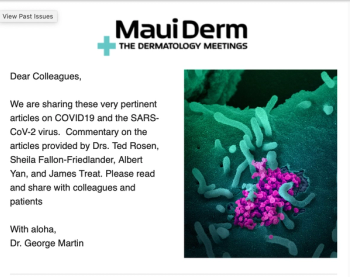
As the number of patients infected with COVID-19 continues to rise, several experts are relaying data they say may save lives and change the course of this pandemic. According to Drs. George Martin, Ted Rosen, Sheila Fallon-Friedlander, Albert Yan, and James Treat, recent data provides evidence of the use of HCQ, its dosing, as well as epidemiology insights that will serve all healthcare practitioners in the fight against the novel coronavirus, COVID-19.

As the national pandemic continues to escalate, the American Academy of Dermatology is actively compiling resources related to the novel coronavirus to support its members and their practices.

The American Academy of Dermatology (AAD) has issued interim recommendations for practitioners to balance the risk of immunosuppression with the risk of disease flare amid COVID-19 pandemic.

Risankizumab (SKYRIZI, AbbVie), outperformed secukinumab (Cosentyx, Novartis) in a head-to-head phase 3 study comparing the two treatments in adult patients with moderate to severe plaque psoriasis, according to data released by the company Jan. 14.
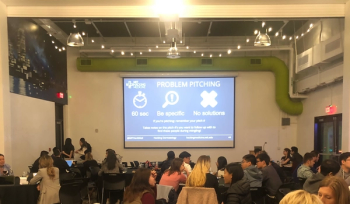
By the end of a three-day weekend, five of the teams at Hacking Dermatology's 2019 Hackathon walked away with $5,000 each. Learn more about the collaboration that took place and the solutions each team developed to solve pressing problem areas in dermatology.


New drugs, data and guidelines on acne and rosacea treatment were among the takeaways from days two and three of MauiDerm 2014. Presenters also described evidence-based suggestions for managing pigmentary disorders and updated information on infectious diseases.
We now have three neurotoxins in our marketplace. Do you feel that these neurotoxins differ, and if so, how? An expert panel addresses the topic at the 2013 Vegas Cosmetic Surgery and Aesthetic Dermatology meeting.
Which products do you use and in which plane do you inject when rejuvenating the temple? A panel of experts in dermatology and plastic surgery identify their preferences for devices and techniques for temple revolumization.
The Food and Drug Administration has approved Sorilux Foam 0.005 percent for the topical treatment of plaque psoriasis of the scalp.
Medical students can better identify and diagnose skin cancer after learning how to use a dermatoscope, researchers have found.
Patients with severe psoriasis who were treated systemically with biologic agents or methotrexate had a lower combined risk of death, myocardial infarction and stroke, according to the results of a recent study.
The use of polyalkylimide filler in patients with HIV-related facial lipoatrophy is associated with a high risk of infectious complications, which can occur years after treatment, according to a recent study.
Reflectance confocal microscopy is a valuable noninvasive tool for diagnosing basal cell carcinoma and melanoma, and may dramatically reduce unnecessary excisions of benign lesions, according to a recent study.
Melanoma transection does not affect a patient’s overall disease-free survival or mortality, and punch and saucerization biopsies may be more likely to transect tumors than excisional biopsies, according to a recent study.
The Food and Drug Administration has approved Nuvail (poly-ureaurethane 16 percent, Innocutis) nail solution for the treatment of nail dystrophy.
The size of a patient’s tattoo, and the patient’s smoking status, are significant factors in whether a tattoo can be effectively removed with lasers, according to a recent study.
A newly developed device using spatial frequency domain imaging and light-emitting diodes can measure biochemical compositional changes in port wine stains after laser therapy, according to results of a pilot study.
Springfield is the latest Illinois city to ban teens from indoor tanning. The city council approved a measure to keep teenagers ages 14 to 17 out of tanning salons, even with parental consent.
Experts from four dermatology organizations have collaborated to publish the first appropriate use criteria for 270 Mohs micrographic surgery scenarios.
The Food and Drug Administration has warned L’Oreal it must alter claims about the capabilities of some of its anti-aging products or face an order to halt sales.
