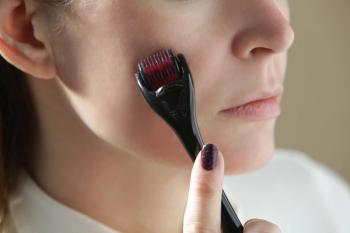
Can at-home dermarollers give the same results as in-office microneedling or is that just a myth? Read more about the latest social media trend and learn how to counsel your patients in the clinic.
New study reveals how microneedle radiofrequency technology effectively addresses postpartum abdominal skin laxity, enhancing skin elasticity and patient satisfaction.
As societal pressures and negative perceptions of postpartum body image increase, it is vital for clinicians to prioritize women’s well-being during this phase. There is an increased patient need for safe, effective, and minimally invasive therapies for postpartum abdominal skin laxity. In a recent study, investigators tested the efficacy and comfort of a bipolar microneedle radiofrequency device in this patient population.1
According to the authors, there is a notable gap in research on clinical assessments for abdominal laxity, particularly in Chinese patients. Treatments such as radiofrequency, ultrasound, mechanical massage, and phototherapy have grown in popularity.2 In particular, the advanced technology of radiofrequency creates substantial efficacy with minimal adverse effects and low risk in all skin types.
“The primary objective for postpartum patients with mild-to-moderate abdominal skin laxity is to attain a firmer, flatter abdomen with minimal or non-visible scarring and to address these issues with the least discomfort and recovery time possible,” the authors wrote.
In this open-label, single-arm study, 15 postpartum women with mild to moderate laxity were treated from June to October 2024 at the Department of Plastic Surgery at Ninth People’s Hospital of Shanghai Jiao Tong University School of Medicine. The mean age of the cohort was 37.3 years, with a range of 29 to 60. Each participant received 3 treatments at 8-week intervals.
Patients were treated with the Morpheus 8 bipolar microneedle radiofrequency technology with uninsulated needles (0.25 mm in diameter and 0.5 mm in length) along with an insulated housing containing 40 pins. The technology merges a bipolar radiofrequency with a microneedle handpiece. Through controlled heating, subcutaneous hyaluronic acid and elastin levels are enhanced while adipose tissue accumulation is reduced. According to the clinical investigators, the procedures typically involved 1 to 2 passes at a 5 mm depth in the device’s “Burst” mode (energy level between 25 and 30), followed by localized enhancement at a 2 mm depth in the “Cycle” mode (energy level between 10 and 20).
Post-treatment guidance included cold packs and an antibiotic cream to use for 1 to 3 days. Normal activities were resumed in about 5 to 7 days, once the pinholes and scabs had healed. Eight weeks after the final treatment, investigators assessed global aesthetic improvement using the GAIS scale, abdominal circumference, biomechanical properties, and patient satisfaction
Before and after results demonstrated improved skin elasticity, firmness, viscoelasticity, collagen content, thickness, dermal volume, structural remodeling, and echo density. Non-significant reduction in abdominal circumference was also observed (80.47 ± 7.333 cm pretreatment vs. 79.38 ± 7.220 cm post-treatment, p = 0.0737). In fact, one patient experienced increased collagen density and restoration of the dermal-epidermal junction.
Over 78% of participants were satisfied with the treatment, with an overall satisfaction of 2.4 on a 0-4 scale. They reported tighter, smoother skin and narrower striae gravidarum. An average intraoperative comfort score of 2.93 out of 10 was noted with no serious adverse events or high levels of discomfort. Minor reactions such as erythema, localized edema, burning, pruritus, scabs, blisters, and uneven pigmentation were observed in the first week of treatment.
To expand on this research and verify results, the study authors suggest more studies with increased sample sizes and subgroup analyses, and longer follow-up to establish optimal treatment parameters. Additionally, skin biopsies with molecular testing can confirm microneedle radiofrequency’s impact on fibroblast function.
References
1. Bai Y, Zhang Y, Bai Y, Li J, Fu X, Yao M. An open single-arm clinical study of microneedle radiofrequency technology for addressing abdominal skin laxity in postpartum women. J Dermatolog Treat. 2025;36(1):2581744. doi:10.1080/09546634.2025.2581744
2. Lin FG. Nonsurgical Treatment of Postpartum Lower Abdominal Skin and Soft-Tissue Laxity Using Microfocused Ultrasound With Visualization. Dermatol Surg. 2020;46(12):1683-1690. doi:10.1097/DSS.0000000000002576