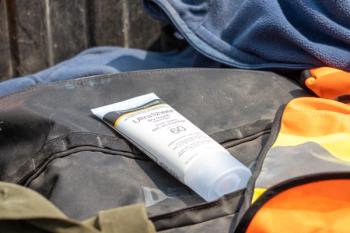
Two new Neutrogena facial sunscreens incorporate bemotrizinol, the first new sunscreen active ingredient added to the US OTC monograph in decades.
Explore the top headlines of the week, including insights on the latest clinical trials, therapeutic updates, and more.
To stay up to date with the latest dermatology news, sign up to receive our
The US FDA has issued a safety communication warning clinicians and patients of serious complications linked to radiofrequency (RF) microneedling devices, which are increasingly used for skin rejuvenation, acne scarring, and tightening. Reported adverse events include burns, scarring, subcutaneous fat loss, nerve injury, and disfigurement, often associated with improper device use or insufficient operator training. Experts Kachiu Lee, MD, and Zoe Diana Draelos, MD, emphasized that RF microneedling is a medical procedure, not a cosmetic treatment, and should only be performed by trained dermatologists using FDA-cleared devices. The FDA urges clinicians to monitor patients carefully, report complications via MedWatch, and ensure informed patient consent regarding risks such as contour irregularities and pigmentary changes. Ongoing investigations may lead to updated labeling, training requirements, and enhanced post-market safety oversight.
At the recent
New long-term data from Johnson & Johnson’s phase 3 ICONIC-TOTAL study highlight the durable efficacy and favorable safety of icotrokinra, an investigational oral peptide that selectively blocks the IL-23 receptor, for moderate-to-severe plaque psoriasis, including difficult-to-treat areas such as the scalp, genitals, hands, and feet. Through 52 weeks, high rates of site-specific clearance were observed, with up to 85% of patients achieving clear or almost clear skin in genital psoriasis and 72% in scalp psoriasis; hand and foot psoriasis responses increased from 42% at Week 16 to 62% at Week 52. Overall, 67% of patients reached clear or almost clear skin, and 44% achieved complete clearance, with consistent results in those switching from placebo. The safety profile remained favorable with no new signals, supporting icotrokinra as a once-daily oral therapy. As the first targeted oral peptide to inhibit the IL-23 receptor, icotrokinra is being evaluated across multiple trials in both adult and adolescent populations, with future studies planned in psoriatic arthritis, ulcerative colitis, and Crohn’s disease, underscoring its potential as a transformative treatment for immune-mediated conditions.
AbbVie reported positive topline results from two phase 3 trials evaluating upadacitinib 15 mg (Rinvoq) in adults and adolescents with non-segmental vitiligo (NSV), the most common subtype affecting over 90% of patients. Across both studies, upadacitinib significantly improved total body and facial repigmentation at 48 weeks compared with placebo, with up to 48% of patients achieving ≥50% reduction in facial depigmentation (F-VASI 50) and around 20–22% reaching ≥50% total body repigmentation (T-VASI 50). The trials met co-primary and key secondary endpoints, and results were consistent across studies. Safety was in line with upadacitinib’s known profile, with mostly mild adverse events and no new safety signals.
Bristol Myers Squibb presented new data reinforcing the efficacy and safety of deucravacitinib (Sotyktu), a first-in-class oral TYK2 inhibitor, in psoriatic arthritis (PsA) and systemic lupus erythematosus (SLE). In the phase 3 POETYK PsA-1 trial, deucravacitinib demonstrated sustained improvements through Week 52 across multiple PsA domains, with ACR20 responses of 63.1% in continuous treatment and evidence of inhibition of joint damage progression. Patient-reported outcomes and higher-order endpoints (ACR50/70) also improved, and the safety profile remained consistent with prior data, showing no new safety signals. Long-term follow-up from phase 2 PAISLEY-SLE and LTE studies indicated durable efficacy for up to 4 years in moderate-to-severe SLE, with sustained responses in SRI-4, BICLA, LLDAS, and CLASI-50, and a favorable safety profile across dosing regimens. These results support deucravacitinib as a potential oral option for PsA and reinforce ongoing phase 3 studies in SLE, with regulatory submissions underway for PsA in multiple regions and a PDUFA date set for March 6, 2026.