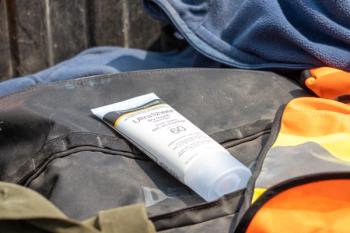
Two new Neutrogena facial sunscreens incorporate bemotrizinol, the first new sunscreen active ingredient added to the US OTC monograph in decades.
In case you missed it, this week we had news about positive results from Incyte’s phase 3 STOP-HS trials, multidisciplinary approaches to advanced BCC and CSCC, pediatric ocular adverse effects associated with dupilumab, and more.
To stay up-to-date with the latest dermatology news, sign up to receive our
Cryo-EM reveals molecular mechanisms of clindamycin resistance in Cutibacterium acnes, highlighting key mutations affecting antibiotic binding.
Incyte’s phase 3 STOP-HS trials demonstrated significant efficacy and safety of povorcitinib in moderate to severe hidradenitis suppurativa.
Tomassian noted unrealistic beauty standards fueled by social media filters and edited images have led to distorted expectations.
Experts stressed the importance of dermatologists engaging in climate advocacy and adopting sustainable practices, as their actions may inspire others to follow suit.
Patients observed a 56% reduction in lesions after 56 days of treatment with only mild adverse events.
Explore a comprehensive roundup of the most important AAD late breakers, all in one place – key insights from the latest dermatology research.
Join Dermatology Times in celebrating the women who make this field shine through their patient interactions, clinical insights, and research.
Discover the latest research from the AAD poster hall, compiled in one place for dermatology professionals.
A comprehensive evaluation of therapies found that lasers were most effective with high rates of patient satisfaction.
A pilot study revealed that mitochondrial complex I-blocking drugs, like metformin and berberine, improved TSW symptoms in most participants.
According to a clinical trial and in vitro study, TTFE can promote scalp health and hair growth by 96.88% while reducing inflammation.
In part 1 of this Frontline Forum supplement, experts discuss the burden of HS, reducing diagnostic delays, and more.
This review of the latest dermatologic studies includes insights into supporting laser tattoo removal for adults impacted by the justice-system, a case of blastic plasmacytoid dendritic cell neoplasm, and more.
Valerie Harvey, MD, MPH, FAAD, discusses pigmentary disorders like melasma and hyperpigmentation, highlighting their disproportionate impact on women, particularly those with skin of color.
The expert discussion focused on patient management strategies, treatment modalities, and the role of multidisciplinary collaboration.
According to a survey, both patients and clinicians are unsatisfied with the current therapeutic landscape and are looking for options that better fulfill patient needs.
The investigational drug, designed using AI technology, optimizes pharmacologic characteristics for psoriasis treatment.
Participants experienced smoother, younger-looking skin after just 1 session, with results lasting up to 16 weeks.
Tezepelumab reduced CSU activity post-treatment through week 32, suggesting a delayed, sustained TSLP blockade effect.
A 30-year-old patient with dermatofibrosarcoma protuberans faced a recurrence after initial surgery. Mohs micrographic surgery was used for precise excision, reducing recurrence risk and improving outcomes.
John Strasswimmer, MD, PhD, spoke on the difficulty of managing adverse effects, the role of interdisciplinary clinical relationships, and the challenges in complex and older patients.
The phase 1a study is a first in-human trial evaluating SYX-5219 for AD.
A recent study highlights the need for ophthalmologic monitoring in pediatric dupilumab therapy.
This real-world data explores the use of the IL-17A blocker for up to 3 years in several subtypes of psoriasis.
Nail psoriasis affects 50% of plaque psoriasis patients, making effective treatments crucial.
The review also found that female patients with non melanoma skin cancer demonstrated a greater risk of completed suicide compared to members of a control group.
Key estate planning changes in 2025: potential tax law shifts, federal exemption sunset, retirement account rules, state death taxes, and cryptocurrency issues.
Estrogen therapy and certain diuretics may increase skin cancer risk, highlighting the need for careful patient counseling and sun exposure management.
The 730-nm picosecond laser had an efficacy rate of 88% with higher patient satisfaction compared to the 1604-nm wavelength.
In part 2 of this Frontline Forum supplement, experts discuss current and emerging treatments, digital tools and supports, and more.
Participants reported increased confidence in clinical interactions and greater interest in dermatology as a career path.
At week 24, the proportion of Asian patients achieving significant hair regrowth (SALT ≤20) was substantially higher in ritlecitinib treatment groups than in placebo groups.
Eve Arnera and Thandiwe Munaiwa, MD, spoke about the groundbreaking collaboration between SkinCeuticals and ReSurge International, “Pioneering Women in Reconstructive Surgery.”