Welcome to this week’s roundup of the most insightful and impactful articles from the sister publications of Dermatology Times, all under One MJH Life Sciences. Our network brings together expert perspectives, clinical advancements, and industry updates to keep clinicians informed and ahead of the curve. From cutting-edge treatments to practice management strategies, here’s a look at the top stories shaping the field of medicine.
Reported by Contemporary OB/GYN, the FDA approved the first generic version of mifepristone tablets (200 mg), submitted by Evita Solutions, LLC under an Abbreviated New Drug Application (ANDA). The generic is confirmed to be bioequivalent and therapeutically equivalent to Mifeprex, the brand-name product marketed by Danco Laboratories, and is indicated in combination with misoprostol for the medical termination of intrauterine pregnancy through 70 days of gestation. Like the brand version, the generic will be distributed under the Mifepristone Risk Evaluation and Mitigation Strategy (REMS) Program, a shared safety system that includes Elements to Assure Safe Use (ETASU) and an implementation system. Evita Solutions’ REMS was approved in April 2025, and FDA emphasized that the product must comply fully with these requirements before entering interstate commerce. This approval marks an important regulatory milestone, broadening access to a lower-cost alternative while maintaining strict safeguards to ensure patient safety.
In Medical Economics, Maninder “Mini” Kahlon, PhD, a systems and behavioral neuroscientist and co-founder and CEO of Beheld, discussed how restoring human connection in health care can significantly improve patient outcomes. She noted that today’s system—fast-paced, technology-driven, and financially pressured—often leaves providers without the time or resources to build empathetic relationships, even though studies show social disconnection carries health risks equal to smoking or alcohol use and greater than inactivity or obesity. Kahlon pointed to research, including a Dell Medical School clinical trial, showing that simple empathy-focused phone calls from nonmedical staff led to measurable improvements in blood sugar control and mental health for patients with diabetes. Beyond diabetes, strong emotional support has been linked to longer survival in cancer, reduced cardiovascular mortality, and improved mental health across conditions. Kahlon emphasized that empathetic, trust-building interactions—whether in clinics or through scalable interventions—are as powerful as some medical treatments, enhancing patient satisfaction, adherence, and long-term health outcomes while also lowering costs for health systems.
The FDA has approved lurbinectedin (Zepzelca) plus atezolizumab (Tecentriq) or atezolizumab/hyaluronidase-tqjs (Tecentriq Hybreza) as maintenance therapy for patients with extensive-stage small cell lung cancer (ES-SCLC) whose disease has not progressed after induction with atezolizumab, carboplatin, and etoposide, according to Oncology Nursing News. The decision was supported by the phase 3 IMforte trial, which showed the combination significantly improved outcomes, with median overall survival of 13.2 months versus 10.6 months and median progression-free survival of 5.4 months versus 2.1 months compared with atezolizumab alone. Safety was manageable, with mostly low-grade adverse events and no meaningful increase in immune-related toxicities. Investigators, including Luis Paz-Ares, MD, PhD, noted these results mark the first phase 3 evidence of OS and PFS benefit in first-line maintenance for ES-SCLC, positioning the regimen as a potential new standard of care for this aggressive disease.
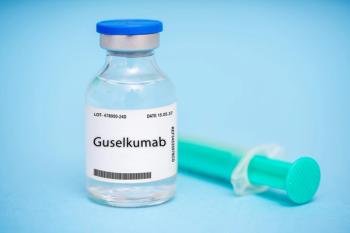
In 2025, the biosimilars market advanced across Europe, Asia, and the Middle East/North Africa (MENA), with major developments reported by The Center for Biosimilars. Celltrion announced milestones at the European Academy of Dermatology and Venereology Congress, including the launch of Omlyclo, Europe’s first approved omalizumab biosimilar, and positive early data for its proposed secukinumab biosimilar (CT-P55). The company also gained approval to begin a phase 3 trial of CT-P44, a daratumumab/hyaluronidase biosimilar, in relapsed or refractory multiple myeloma. Meanwhile, the European Medicines Agency’s Committee for Medicinal Products for Human Use recommended approval of STADA’s denosumab biosimilars, Kefdensis and Zvogra, which, if cleared, would enter a €1 billion market following exclusivity expiry in late 2025 and mark STADA’s tenth biosimilar in Europe. In the MENA region, Polpharma Biologics partnered with MS Pharma to commercialize vedolizumab, ocrelizumab, and guselkumab biosimilars, with manufacturing support localized to Saudi Arabia. Collectively, these updates underscore growing global momentum to expand patient access and affordability in high-need therapeutic areas.
In response to the FDA’s September 22 announcement suggesting that acetaminophen use in pregnancy may increase the risk of autism and ADHD in children, Psychiatric Times interviewed Sarah Oreck, MD, MS, a reproductive psychiatrist, who strongly refuted the claim. Oreck cited a February 2024 meta-analysis showing no increased risk and emphasized that prior studies were poor quality and confounded by underlying maternal health conditions. She argued that pathologizing autism as something to “prevent” is harmful, noting the real issue is a lack of services and support for neurodivergent children and families. Oreck warned that misinformation like this fuels medical mistrust, discourages pregnant patients from treating conditions such as fever—which can pose real risks to fetal development—and worsens maternal mental health. She urged clinicians to validate patients’ fears, explain the science clearly, and stress that untreated illness often poses greater risks than acetaminophen. Ultimately, Oreck described the FDA’s statement as medical gaslighting, calling instead for evidence-based, compassionate care that empowers mothers to make informed choices without stigma or fear.
Want to read more on specialty care, pharmacy, industry sciences, and more? Check out MJH Life Sciences full list of brands here.