Faculty from the Cutaneous Oncology Workshop answer practical questions spanning skin cancer prevention, diagnosis, treatment, and follow-up.
A recent case reinforced excimer laser therapy as a precise, efficient, and well-tolerated approach in managing cutaneous T-cell lymphoma variants.
A newly published case report in Case Reports in Oncology describes successful treatment of poikilodermatous mycosis fungoides (pMF), a rare and under-recognized variant of cutaneous T-cell lymphoma (CTCL), using a 308-nm excimer laser. The study, conducted by dermatology researchers at Tohoku University Graduate School of Medicine, represents the first English-language report documenting this therapeutic approach in pMF.1
Mycosis fungoides (MF), the most common form of CTCL, is a rare malignancy involving neoplastic proliferation of skin-homing T lymphocytes. It presents with patch, plaque, or tumor-stage lesions that can mimic benign dermatoses, often delaying diagnosis. Researchers stated epidemiologic data from the SEER and National Cancer Database indicate an incidence of approximately 4 to 6 cases per million person-years in the United States, with higher prevalence among males and African American patients.2
The poikilodermatous subtype (pMF) is characterized by reticulated pigmentation, atrophy, and telangiectasia. Although typically indolent, pMF can be refractory to topical and systemic therapies, emphasizing the need for alternative lesion-targeted interventions.
The reported case involved a 50-year-old woman with a 3-year history of progressive reticulated pigmentation and atrophic macules on the left thigh. Previous treatment with topical corticosteroids and vitamin D analogs had failed to halt disease progression. Histopathologic and immunohistochemical evaluation confirmed pMF.
Treatment was initiated using a 308-nm excimer laser, delivering 1,250 mJ/cm² of energy across 5 sessions in conjunction with topical corticosteroids. After 3 months, the patient exhibited marked clinical improvement, with complete resolution of erythema and minimal residual pigmentation. No adverse events were reported.
The authors concluded that the excimer laser was safe, effective, and well-tolerated in localized patch-stage pMF—an area where standard phototherapy and systemic agents may be less practical or carry higher risks.
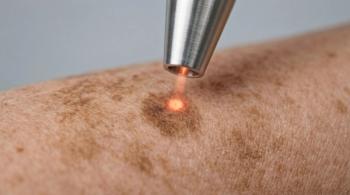
The 308-nm excimer laser produces monochromatic UVB light, enabling targeted irradiation of affected lesions while sparing uninvolved skin. Compared to whole-body narrowband UVB (NB-UVB) or psoralen plus UVA (PUVA), this modality minimizes cumulative UV exposure and systemic adverse effects. The higher fluence achievable with the excimer laser may enhance efficacy in thicker or treatment-resistant lesions.
Previous evidence supports its use in early-stage MF, psoriasis, vitiligo, and alopecia areata. A 2023 International Journal of Dermatology systematic review encompassing 14 studies and 72 MF patients reported a 73.6% complete clinical response rate following excimer laser therapy, with histologic remission in 75% of those evaluated. Adverse effects were minimal and transient, consisting primarily of erythema, pruritus, or first-degree burns. These findings collectively underscore the laser’s safety and durable efficacy profile.
Dolev Rafaeli, PhD, president and CEO of Strata Skin Sciences, the manufacturer of the XTRAC Excimer Laser, highlighted the technology’s expanding therapeutic relevance:
“The XTRAC Excimer laser continues to draw attention worldwide for its versatility in treating inflammatory skin conditions. It is that versatility, both in monotherapy and in combination with multiple medications, that has resulted in the Centers for Medicare and Medicaid Services (CMS) significantly expanding the reimbursement codes for a much wider variety of these conditions, including MF and pMF.”
He further emphasized the global clinical validation of the platform, noting,
“Independent investigators continue testing the limits of XTRAC therapy, and publication after publication verifies the clinical track record of the device, whether in patients in the US or worldwide.”
The study’s authors from Tohoku University conducted the investigation within a research environment known for advancing dermatologic phototherapy. Japan remains an active region for exploring novel uses of excimer-based technologies in autoimmune and lymphoproliferative skin diseases.
For clinicians managing MF and its variants, particularly localized or treatment-refractory cases, excimer laser therapy offers a precision-based alternative to systemic agents and whole-body phototherapy. Its lesion-specific delivery enables clinicians to achieve therapeutic dosing without extensive collateral exposure.
Given the favorable safety profile and accumulating evidence of efficacy, excimer laser therapy may increasingly serve as a front-line or adjunctive option in early-stage CTCL management. While this single case adds to a growing body of literature, larger controlled studies are needed to define optimal dosing parameters, treatment intervals, and long-term outcomes in pMF.
The Tohoku University case study marks an important milestone in expanding the therapeutic scope of the 308-nm excimer laser beyond traditional inflammatory dermatoses. For clinicians treating early-stage MF and its rare variants, such as poikilodermatous MF, excimer laser therapy represents a promising, lesion-directed modality combining precision, safety, and efficacy.
References