LEO Pharma has closed its acquisition of dersimelagon from Tanabe Pharma after the FDA accepted the drug's NDA for filing and granted Priority Review, with a PDUFA date expected by the end of February 2027.
IKI Skin Care by Maria Urbani, MD offers effective solutions for rosacea and sensitive skin through science-backed, minimalist formulations.
In today’s saturated skincare landscape, few brands are built with both clinical expertise and personal experience at their core. Maria Urbani, MD, a dermatologist from Bogota, Colombia, specializing in aesthetic medicine and laser therapy, brings both perspectives to her brand,
IKI’s recent launch includes 6 products featuring ingredients like centella asiatica, colloidal oatmeal extract, kojic acid, and copper peptides. These formulations merge science-backed formulations with a minimalist approach for patients of all skin types, including those with severely sensitive skin. In this exclusive Q&A with Dermatology Times, Urbani shares the clinical and personal motivations behind IKI, the brand’s commitment to evidence-based care, and how it offers a practical, transparent alternative for patients and providers navigating the noise of today’s skin care trends.
Q&A
Dermatology Times: What inspired the creation of IKI SkinCare and its philosophies?
Urbani: As a physician who specialized in aesthetic medicine, I spent several years treating patients with sensitive, reactive, and inflamed skin, and being an actual patient with rosacea, I have dealt several years with sensitive skin myself. For so many years, we have known it's worsened by overly complex skin care routines, harsh ingredients, and trendy formulations that lack scientific backing. IKI was born out of this necessity. We know there's a need to simplify the skin care routine while honoring, at the same time, the integrity of the skin barrier.
The name IKI was inspired by the Japanese concept of ikigai, a philosophy about finding purpose in simplicity and authenticity. That's reflected in every single product of our brand, where we merge clean, non-comedogenic, fragrance-free formulations. I spent several years researching sensitive skin and rosacea, the disruption of the skin barrier, and I found out that there need to be a balance in the formulation between the active ingredients you need to treat conditions such as acne, hyperpigmentation, melasma, aging, but in the meantime, you need to balance with ingredients to soothe and heal and treat the skin barrier. I found that in Japanese formulations. We also cater to the modern patients who want minimalism. I know right now there’s a growing demand for clean skin care, but often that term is really used as a marketing buzzword. But for us, clean means transparency, stability, and safety. All our products are free of irritants, unnecessary additives, and at the same time, we draw from the J-beauty ethos of prevention, balance, and skin harmony.
Dermatology Times: What gap or need does IKI SkinCare fill, especially in a market that is oversaturated? How does the brand cater to patients who are interested in trends like “clean skincare” and “J-Beauty”?
Urbani: I agree, the market is flooded with skin care lines. But I find in my practice, a lot of patients sit in front of me that are dealing with rosacea, sensitive skin, or disruption of the skin barrier, and they are always complaining about how they can't find the perfect product in the market that soothes their skin in the same time it's treating something else, another skin condition. Even myself, I had a hard time with trial and error finding a good skin care company. I found there might be a disconnect in these skin care brands between the active ingredients I know you need to treat conditions such as acne, hyperpigmentation, melasma, and aging, but the other ingredients to calm and soothe to make this product suitable for people with reactive skin, with rosacea, or with a disruption in the skin barrier. So IKI came to fill this gap, and I found, with a lot of research that you can merge these 2 concepts, and I came up with the best of both worlds, a formula that has the balance to be suitable to treat some conditions but in the meantime, honoring and healing and respecting the rosacea process, the inflammatory process and the disruption of the skin barrier.
Also in my medical practice - and I know most physicians can relate - it's so difficult to make a patient commit to long routines with lots of products, and sometimes they come to my practice feeling overwhelmed by those endless routines. So I came up with a shorter routine, which is easy to follow with 3 to 4 steps in the morning and at night. And all of us know that the best routine isn't the one with more product, it is the one that our patients really commit to and do.
About the trends...This is a great question. I know trends can make a lot of noise, and I have all my patients, too, who can't stop talking about those trends, like glass skin or whatever a celebrity is doing. And I know that makes a lot of noise, but we are physicians, and we know we need to educate the patient in skin care, and we need to choose the perfect product for a patient to fit in perfectly. Not because it's a trend we saw on TikTok, but because we know that the product is backed by science and the ingredients are backed by science. And also because we know that the product was dermatologically tested. At IKI, we know there's no one who knows the skin as well as a skin specialist. And we’ve selected every single ingredient based on the science behind them and the safety and effectiveness. What's more important to me is their role in the whole purpose of each formula. Nothing more, nothing less.
Dermatology Times: How should clinicians be approaching conversations with patients on "viral" skin care trends?
Urbani: We are physicians and we need to continuously educate patients about these trends. Everyone needs to do skin care, but it needs to be backed by science, because that's what we do. We prescribe when it's backed in science because we know these therapies have the efficacy and the safety to use in patients with sensitive or reactive skin. We have these dermatological tests because we believe there's no one better to test a product, to be in the market, and to treat the skin.
Dermatology Times: What’s next for IKI? Is there anything else you’d like to share with our audience of dermatologists?
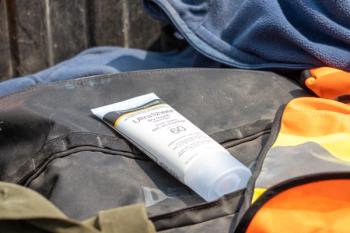
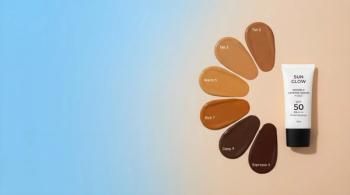
UrbanI: I'd just like to emphasize that IKI was built not just as a brand, but as a tool for dermatologists and aesthetic practitioners. It's meant to simplify the recommendations and increase your patient adherence, because when patients see results without irritation, they stay consistent. Also at IKI, we are committed to education. Our website includes clear instructions, routine builders, and ingredient transparency so patients can feel empowered. We believe skin care should be effective, inclusive, and intuitive with easy-to-follow steps, and that for sure, starts in the clinic. In terms of the future of IKI, we're now working on our sunscreen, which is going to be mineral. It's coming out next summer in an untinted version and 3 shades of a tinted version.
[This transcript has been edited for length and clarity]