Clinical Applications and Adjunctive Benefits
Based on the available evidence, GliSODin is not a monotherapy but rather an adjunct. With retinoids like tazarotene, tretinoin, and adapalene, GliSODin appears to:
- Enhance efficacy (41.7% greater wrinkle reduction, 53% greater photodamage improvement)
- Improve tolerability (103% greater moisture retention—retinoids typically dry the skin)
- Accelerate response (combination group showed earlier visible improvement)
While no direct laser combination studies exist for GliSODin, the capillary regeneration data (+33% faster recovery from UV-induced capillary damage) suggest potential benefit for post-laser healing.1 The mechanism is directly relevant to fractional laser, IPL, and vascular laser procedures.
The 2018 hyperpigmentation study demonstrates that GliSODin more than triples the effect of a depigmenting cream when both are used with proper sun protection.3 This is clinically meaningful for patients with melasma, post-inflammatory hyperpigmentation, or solar lentigines who are partial responders to topical therapy alone.
Furthermore, GliSODin works with sunscreen, not instead of it. The MED study showed a 7.6% increase in the UV dose required to produce a burn—meaningful but not protective against prolonged exposure.1
Patient Selection and Clinical Candidate Profiles
The fair-skinned patients (phototypes I-II) who burn easily, tan poorly, and have a history of sunburns would benefit most. For these individuals, GliSODin adds a measurable layer of defense beyond sunscreen alone. Any patient using topical tretinoin, tazarotene, or adapalene for photoaging or acne who experiences dryness, peeling, or irritation, or who is not achieving desired results, is also a candidate. It would also be beneficial for patients with refractory hyperpigmentation, especially those who have tried hydroquinone, kojic acid, and tranexamic acid with partial response or who cannot tolerate higher concentrations of topical agents.
Patients who ask about "glow" and "radiance" would also be suitable. These are general "low-grade inflammatory" phenotypes—urban dwellers exposed to pollution, smokers (though smoking cessation is the real intervention), and individuals with visible oxidative stress (sallow complexion, uneven tone, fine lines). And while direct evidence is limited, the capillary regeneration data suggests benefit for any procedure that generates a significant oxidative burst: laser resurfacing, chemical peels, intense pulsed light, and even post-surgical wound healing.
Translating the Science for Patients and Colleagues
When speaking with a skeptical dermatologist, I frame it with intellectual honesty, not marketing enthusiasm.
Most supplements are what I call 'bucket chemistry.' You pour in antioxidants, and they neutralize a few free radicals, but your body just pees them out. SOD is different as an enzyme that your body actually produces naturally. The problem is that after age 27, your SOD production declines. And until recently, you could not take it orally because your stomach would digest it.
This specific formulation solves that problem. The gliadin coating is a delivery technology that has been studied in peer-reviewed trials. When it works, it does not just add antioxidants to your system. It stimulates your body to produce more of its own SOD, plus glutathione peroxidase and catalase. You are restarting your own engine, not just pouring in fuel.
The data are not perfect. Sample sizes are small and most studies are industry-sponsored, so more long-term research is needed. But the direction of the evidence is consistent. For patients who are already doing everything right (sunscreen, retinoids, procedures), GliSODin is a low-risk adjunct that may add measurable benefit.
For the skeptical patient, I tell them that their skin is like a house. Sun, pollution, and simply getting older create damage like rust on the pipes and cracks in the walls. Most skin supplements are like paint. You put them on, they look nice for a while, but the underlying rust is still there.
GliSODin is different. It works like a housekeeper who not only cleans but also teaches your family to clean up after themselves. It restores your skin's own repair system—the enzymes that have been working since you were a child but have gotten tired with age.
The catch? It takes time. And it is not a magic pill. You still need sunscreen, you still need your retinoid cream, and you still need checkups. But for patients who want to do everything possible to keep their skin healthy and youthful, this is a tool with real science behind it.
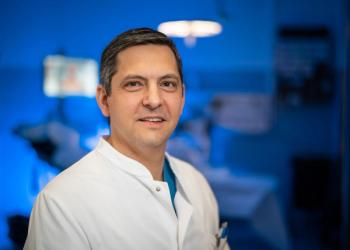
John Harvey Gaviria Calderón, MD, is a dermatologist, researcher, and speaker based in Manizales, Colombia, who focuses on a holistic approach to skin health. He is the co-founder of InBiotech and founder of Eleva Funcional.
References
1. Mac-Mary S, Sainthillier JM, Courderotmasuyer C, Creidi P, Humbert P. Could a photobiological test be a suitable method to assess the anti-oxidant effect of a nutritional supplement Glisodin?. Eur J Dermatol. 2007;17(3):254-255. doi:10.1684/ejd.2007.0169
2. Goldberg LD, Crysler C. A single center, pilot, double-blinded, randomized, comparative, prospective clinical study to evaluate improvements in the structure and function of facial skin with tazarotene 0.1% cream alone and in combination with GliSODin(®) Skin Nutrients Advanced Anti-Aging Formula. Clin Cosmet Investig Dermatol. 2014;7:139-144. Published 2014 May 14. doi:10.2147/CCID.S57600
3. Vedamurthy, M., & Humbert, P. (2018). A randomized, open label, comparative, five-arm, controlled study evaluating the benefit and tolerability of oral superoxide dismutase combined with gliadin as add-on neutraceutical therapy with standard therapy in Indian patients with melasma. International Journal of Research in Dermatology, 4(4), 471–478. doi:10.18203/issn.2455-4529.IntJResDermatol20184453
4. Eric P, Laurent I, François V. Immunomodulatory and Anti-Inflammatory Properties of an Orally Bioavailable Sod-Gliadin Complex. UPI Journal of Pharmaceutical, Medical and Health Sciences, vol. 5, no. 4, Dec. 2022, pp. 68-74, doi:10.37022/jpmhs.v5i4.84.