

News|Articles|December 9, 2025
Meta-analysis Confirms Benefits of Roflumilast 0.3% Cream for PsO
Listen
0:00 / 0:00
Key Takeaways
- Roflumilast 0.3% demonstrated significant efficacy in achieving IGA success and PASI improvements compared to vehicle in plaque psoriasis treatment.
- The treatment showed particular effectiveness in intertriginous areas, addressing a therapeutic niche where traditional corticosteroids are limited.
Discover the efficacy and safety of topical roflumilast 0.3% for psoriasis, highlighting its rapid results and potential for sensitive skin areas.
Advertisement
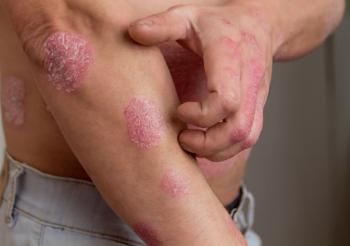
A recently published systematic review and meta-analysis provides an updated evaluation of topical roflumilast 0.3% for plaque psoriasis, synthesizing data from four randomized controlled trials (RCTs) involving 1,403 participants.1 Psoriasis remains a prevalent chronic inflammatory condition, affecting more than 125 million individuals worldwide and associated with significant comorbidity.2 The authors highlight the ongoing need for effective, well-tolerated topical treatments, noting that “This highlights the necessity of exploring alternative topical treatments, such as roflumilast 0.3%, approved by the US Food and Drug Administration (FDA) in 2022 and by Health Canada in 2023.”
Roflumilast, a highly potent topical phosphodiesterase-4 (PDE-4) inhibitor, has emerged as a novel non-steroidal option, and early clinical trials have suggested promising efficacy and tolerability. To strengthen the evidence base, the investigators registered a protocol with PROSPERO and followed PRISMA guidelines to systematically assess outcomes compared with vehicle.
Study Selection and Population
After screening 330 publications, the authors included 3 reports spanning 4 RCTs. A total of 885 patients received roflumilast and 518 received vehicle. Participants were adults and adolescents with mild to moderate plaque psoriasis, with mean baseline PASI scores between 6 and 8. Formulations studied included both cream and foam, applied once daily.
Primary and Secondary Efficacy Outcomes
The primary endpoint—Investigator’s Global Assessment (IGA) or body-IGA success at week 8—demonstrated clear benefit. As reported by the authors, “At week 8, a significantly higher proportion of patients attained IGA or body-IGA success with topical roflumilast 0.3% once daily compared with vehicle (39% versus 7.4%).”
This benefit was consistently observed across earlier time points (weeks 2, 4, and 6). Improvements in PASI metrics followed a similar pattern:
- PASI-50 at week 8: 69.7% vs 25%
- PASI-75 at week 8: 38.7% vs 8.3%
- PASI-90 at week 8: 19.1% vs 3.2%
Response onset was detectable as early as week 2 for most endpoints, which may have meaningful implications for patient adherence.
Intertriginous and Special-Area Psoriasis
The meta-analysis draws particular attention to roflumilast’s performance in areas that tend to be difficult to treat, such as the intertriginous zones. At week 8, 71.9% of patients achieved intertriginous-IGA success versus 20.5% with vehicle. These results may reflect an important therapeutic niche, as traditional topical corticosteroids are often limited by risk of atrophy in thin or sensitive skin.
Safety Profile
Although overall adverse events (AEs) were slightly higher in the roflumilast group (26.6% vs 22.5%), treatment-related AEs, serious AEs, and discontinuations did not significantly differ between groups. The most common events included diarrhea, hypertension, upper respiratory infection, and headache. Local application-site reactions were infrequent in the pooled analysis, suggesting favorable skin tolerability relative to many established topical therapies.
Study Limitations
The authors acknowledge several limitations. Only 4 RCTs were eligible, restricting geographic and demographic diversity. Some heterogeneity emerged in secondary outcomes, although sensitivity analyses indicated stability of the findings. Additionally, long-term outcomes could not be fully assessed, as most included trials followed participants for only 8 to 12 weeks.
Clinical Implications
These findings reinforce topical roflumilast 0.3% as an effective steroid-free therapy for mild to moderate plaque psoriasis and for use alongside systemic or phototherapy regimens. Its demonstrated utility in intertriginous and sensitive-skin areas may help address an unmet need, and its rapid onset of action may promote better adherence. Cost and limited availability outside North America remain practical barriers.
Overall, this meta-analysis provides a valuable synthesis of evidence supporting roflumilast 0.3% as a promising option within the clinician’s topical treatment armamentarium, with further comparative and long-term studies still warranted.
References
- de Moraes-Souza R, Chahine Chater R, Pera Calvi I, et al. Efficacy and safety of topical roflumilast for the treatment of psoriasis: A systematic review and meta-analysis of randomized controlled trials. Clin Drug Investig. 2024;44(9):655-665. doi:10.1007/s40261-024-01368-w
- Bu J, Ding R, Zhou L, Chen X, Shen E. Epidemiology of psoriasis and comorbid diseases: A narrative review. Front Immunol. 2022 Jun 10;13:880201. doi: 10.3389/fimmu.2022.880201.
Advertisement
Related Content
Advertisement



Latest CME


Advertisement
Advertisement
Trending on Dermatology Times
1
How Emerging Androgenetic Alopecia Therapies Target DHT at the Scalp Level
2
The Value of Clinician Collaboration for Skin Cancer Care
3
Social Media Mythbusters: Beef Tallow
4
Tildrakizumab Partially Reverses Epigenetic Aging in Psoriasis, Pilot Study Shows
5