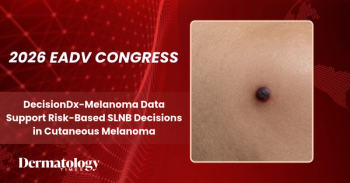
Prospective data suggest DecisionDx-Melanoma may help refine SLNB decisions and identify recurrence risk beyond conventional staging.
A new hybrid model combining deep learning with clinical data achieved high accuracy in predicting sentinel lymph node metastasis in melanoma.
Sentinel lymph node metastasis (SLNM) remains one of the most critical prognostic factors in melanoma, guiding staging, treatment decisions, and survival outcomes. Sentinel lymph node biopsy (SLNB) is widely used for nodal staging, particularly in patients with intermediate-thickness melanoma, but it is invasive and carries risks. Accurate, non-invasive tools to stratify patients by SLNM risk could refine patient selection for biopsy.1-2 A recent study by Le et al introduces a hybrid predictive model that integrates deep learning with a clinical nomogram, offering a potentially powerful new approach for SLNM risk assessment in melanoma patients.3
Methods and Materials
The study enrolled 78 patients with invasive cutaneous melanoma treated at the University of Yamanashi Hospital between 2007 and 2022. Patients underwent excision followed by SLNB, and histopathology combined with reverse-transcription polymerase chain reaction (RT-PCR) determined SLN status. Of these, 43 were SLNM-positive and 35 SLNM-negative. Patients were randomized into training (n = 60) and test (n = 18) sets.
To build the model, the researchers used a clustering-constrained attention multiple-instance learning (CLAM) framework applied to hematoxylin and eosin (H&E)–stained whole-slide images. Among four CLAM variants, the model employing a ResNet50 truncated encoder (CLAM-R50) achieved the best predictive performance. This was then combined with a validated clinical nomogram developed by Wong et al, incorporating patient age, tumor thickness, Clark level, ulceration, and tumor site.
Model Development and Performance
The hybrid model, termed the Melanoma Indicative Scorer for Sentinel Lymph node Evaluation (MISSLE), was created by integrating CLAM-R50 outputs with nomogram predictions using machine learning classifiers. Of the methods tested, gradient boosting delivered the strongest performance, with an area under the receiver operating characteristic curve (AUROC) of 0.950 (95% CI: 0.933–1.00). This surpassed either CLAM-R50 alone (AUROC 0.875) or the nomogram alone (AUROC 0.826).
Attention map analysis revealed morphological correlates of SLNM risk. Researchers stated pale cytoplasm and plasma cell–like tumor morphology were associated with positive SLNM predictions, whereas dense melanin deposition and lymphocyte-like morphology were linked with negative predictions. These findings suggest that deep learning models may capture subtle histopathological features not routinely assessed by pathologists.
Clinical Implications
The study found that MISSLE demonstrated potential utility across clinically relevant scenarios. For intermediate-thickness melanomas, applying a threshold of 0.15 achieved high sensitivity (0.88) and negative predictive value (0.97), while reducing unnecessary SLNBs by nearly 70%. For thick melanomas, a threshold of 0.40 maintained strong predictive value while avoiding more than half of SLNBs. Such stratification could reduce morbidity and healthcare costs while preserving oncologic safety.
The model’s sensitivity analysis also suggested that histopathological features learned by deep learning may detect not only histological metastases but also molecular indications of melanoma, as identified by RT-PCR. This raises the possibility of integrating AI-driven pathology with molecular diagnostics in future workflows.
Limitations
The study has several limitations. The single-center design and relatively small cohort (n = 78) limit generalizability. Nearly all patients were Japanese, and given differences in melanoma subtypes and sun damage patterns across populations, external validation in diverse cohorts is essential. Additionally, the training set size restricted extensive hyperparameter tuning, which may affect performance optimization.
Conclusion
Le et al present MISSLE, a hybrid deep learning–clinical nomogram model that achieved high accuracy in predicting sentinel lymph node metastasis in melanoma. By integrating histopathological image analysis with clinical risk factors, the model may help refine patient selection for sentinel lymph node biopsy and support personalized management strategies. Broader validation in multi-center, multi-ethnic cohorts will be necessary before widespread clinical adoption, but the approach represents a promising advance in AI-assisted oncology
References