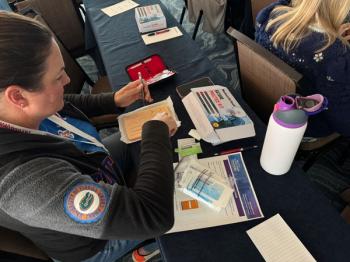
Faculty from the Cutaneous Oncology Workshop answer practical questions spanning skin cancer prevention, diagnosis, treatment, and follow-up.
Discover the latest in skin health innovations and skin care trends shared at SDPA Fall 2025, featuring insights from Heather C. Woolery-Lloyd, MD, FAAD.
At the
The session opened with a historical lens on soap, which Woolery-Lloyd argued is humanity’s first skin care product. Ancient Babylonian tablets from 2800 BCE describe early soap recipes, marking a pivotal advancement in hygiene that helped prevent infectious disease. Classic soaps, however, were highly alkaline (pH 9–12), compromising the skin barrier and promoting irritation. The advent of synthetic detergents, or “syndets,” roughly 50 years ago revolutionized cleansing by allowing for formulations closer to physiologic skin pH, thereby minimizing barrier disruption and inflammation.
Modern cleansers now include micellar waters and oil cleansers, often used in popular “double cleansing” routines to remove makeup before foaming washes. Traditional toners, once used to re-acidify skin after alkaline cleansing, are largely obsolete in an era of balanced formulations. Today’s toners often act as delivery vehicles for active ingredients, according to Woolery-Lloyd.
Moisturizers were reviewed and categorized by function: humectants (e.g., glycerin, hyaluronic acid, urea) draw water into the stratum corneum; emollients (e.g., shea butter, ceramides, squalane) smooth and soften by filling intercellular gaps; and occlusives (e.g., petrolatum, dimethicone, lanolin) prevent transepidermal water loss. She emphasized that even “alcohols” such as cetyl or stearyl alcohol are beneficial fatty alcohol emollients rather than drying agents.
Exfoliation remains a patient-driven trend, though over-exfoliation is common. Mechanical exfoliants include biodegradable options such as sugar or jojoba beads, while chemical exfoliants include alpha-, beta-, and polyhydroxy acids. Woolery-Lloyd reminded attendees that AHAs (glycolic, lactic, mandelic acids) improve texture and tone; BHAs (notably salicylic acid) penetrate follicles to treat acne; and PHAs (e.g., gluconolactone) offer gentler activity for sensitive skin.
Topical antioxidants like vitamins C and E, niacinamide, green tea extract, ferulic acid, and resveratrol remain essential adjuncts for photoprotection. Woolery-Lloyd highlighted data showing that pretreatment with green tea extract can attenuate UV-induced erythema, supporting the combined use of antioxidants with sunscreens.
The audience was reminded that the traditional “physical versus chemical” dichotomy in sunscreens is outdated. There are now 4 main categories: mineral (zinc oxide, titanium dioxide), chemical (avobenzone, octisalate), nano-mineral (which absorb UV similarly to chemical filters), and hybrid formulations combining both. Modern hybrids, typically nano-zinc with octinoxate, achieve broad-spectrum protection with minimal white cast, reflecting regulatory shifts that now permit such combinations.
The second half of the talk focused on global innovation. South Korea recently surpassed France as the top cosmetics exporter to the US, driven by patient enthusiasm for K-beauty and its emphasis on fermented ingredients (e.g., galactomyces, bifida lysate, rice water) that may enhance bioavailability and skin brightening.
Adaptogens, a term coined in 1947, describe botanicals that help skin maintain homeostasis under stress. Common examples include mushrooms, ginseng, ashwagandha, and holy basil, ingredients increasingly incorporated into calming and anti-stress formulations.
Exosomes, tiny extracellular vesicles (30–150 nm) containing lipids, proteins, RNA, and growth factors, were discussed as one of the most promising frontiers in regenerative skin care. While often confused with stem cells or isolated growth factors, exosomes differ in that they serve as biologic messengers that modulate cellular communication. Most topical research has focused on platelet-derived exosomes, with early data suggesting potential for rejuvenation and repair. Another emerging compound, polydeoxyribonucleotide (PDRN)—derived from salmon sperm DNA—has shown regenerative effects, though robust data for topical use remain limited.
Woolery-Lloyd concluded with a critical look at the “clean beauty” movement. Terms such as “natural,” “vegan,” “organic,” and “clean” lack consistent definitions and are largely unregulated by the FDA. While the USDA regulates “organic” claims for agriculture, these standards are loosely applied to cosmetics. Retailers such as Target, Sephora, and Walgreens each maintain disparate “clean” ingredient lists, underscoring the absence of consensus. Woolery-Lloyd cautioned that “clean” is primarily a marketing term.
“I always say in the world, the word ‘clean’ has never been so murky, so it's something that it's good to be aware of, but there's no standardization when it comes to clean beauty,” she said.
The session emphasized that dermatologists must remain conversant in both the science and culture of skin care. As formulations evolve, patients increasingly expect their dermatologists to translate these innovations into evidence-based recommendations that balance efficacy, safety, and wellness.
“Skin care science is constantly advancing and evolving... You have to work to stay up to date,” Woolery-Lloyd told listeners.
Reference
1. Woolery-Lloyd, H. Cosmeceutical Update. Presented at: Society of Dermatology Physician Associates Fall 2025 Conference; November 5-9, 2025; San Antonio, Texas.