Disc Medicine reports the phase 3 APOLLO trial met all primary and secondary end points, with whole-blood PPIX reduced 41.4% vs placebo and an NDA resubmission planned by end of 2026.

A new study published Aug. 4 in
The study’s lead author,
The team found that a recurrent mutation arising uniquely in affected individuals but not present in parents caused the disorder. The affected gene, EMP2, encodes epithelial membrane protein 2, a cell surface tetraspan protein in the growth-arrest specific 3 (GAS3)/peripheral myelin protein 22 (PMP22) family.
EMP2 has previously been shown to directly associate with focal adhesion kinase (FAK), which links cell junction forces to signaling pathways relevant to proliferation, migration, and wound healing. Skin typically undergoes a process of differentiation where cells proliferate in the basal layer, then stop proliferating and undergo a tightly regulated process of gene expression called differentiation, which allows the skin to form a barrier to water loss and ultimately, shed at the surface.
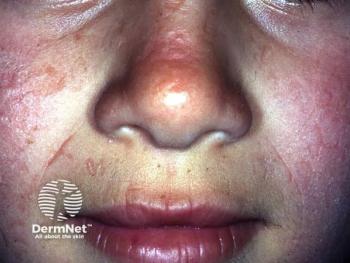
The team studied gene expression in affected skin using single-cell spatial transcriptomics to discover that pathways typically activated in proliferating cells in the basal layer of the skin downstream of receptor tyrosine kinases including epidermal growth factor receptor (EGFR), did not appropriately turn off during differentiation. This provided rationale for treatment with Tarceva (erlotinib), an EGFR inhibitor, which led to resolution of skin disease at many sites.
“This study underscores the power of human genetics to reveal previously unknown functions for genes in the skin, setting the stage for development of new therapeutics,” said Choate.
The research reported in this news article was supported by the National Institutes of Health/National Institute of Arthritis and Musculoskeletal and Skin Diseases (award R01AR068392) and Yale University. The content is solely the responsibility of the authors and does not necessarily represent the official views of the National Institutes of Health/National Institute of Arthritis and Musculoskeletal and Skin Diseases.