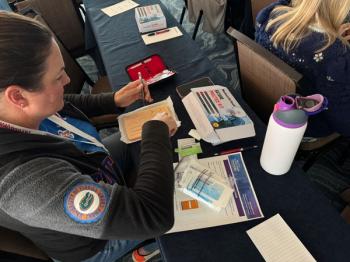
Faculty from the Cutaneous Oncology Workshop answer practical questions spanning skin cancer prevention, diagnosis, treatment, and follow-up.
The resubmission includes additional data and analyses addressing prior FDA concerns and is now classified as a complete response under a Class II review.
Today, Replimune Group announced that the US FDA has accepted its resubmission of the biologics license application (BLA) for RP1 (vusolimogene oderparepvec) in combination with nivolumab for the treatment of advanced melanoma in patients who have progressed on an anti–PD-1 containing regimen. The agency has assigned a Prescription Drug User Fee Act (PDUFA) date of April 10, 2026, indicating a Class II resubmission review timeline.1
The FDA’s acceptance follows several months of conversation between Replimune and the agency, after the company received a complete response letter (CRL) in July 2025. According to Replimune, the resubmission includes “additional information, data, and analyses” addressing the issues raised in the CRL. The FDA has deemed the submission a “complete response,” allowing the review process to formally proceed.2
Last month, Replimune had disclosed that a Type A meeting had been scheduled with the FDA to discuss the CRL for the RP1 BLA.3 At that time, the company submitted a detailed briefing package addressing key regulatory concerns. These included “the points from the CRL highlighting prior agreements related to the patient population, criteria for PD-1 resistance, and use of literature to support contribution of components.” The briefing also presented further analyses of existing data and clarification of the phase 3 confirmatory trial design.
In that earlier communication, Replimune CEO Sushil Patel, PhD, emphasized the company’s ongoing commitment to working with regulators. “We are eager to engage in a productive discussion with the FDA to reach a swift resolution for the accelerated approval of RP1 in advanced melanoma,” he said. Patel noted that there was strong advocacy from clinicians and patient groups for RP1’s availability, given the “urgent need for access…based on the strength of the data and limited effective treatment options for this population.”
RP1 is Replimune’s lead oncolytic immunotherapy product. The therapy is based on a proprietary strain of herpes simplex virus type 1 (HSV-1) that has been genetically modified to enhance both direct oncolysis and systemic antitumor immunity. It incorporates 2 key transgenes: a fusogenic protein (GALV-GP R-) designed to increase tumor cell fusion and lysis, and granulocyte-macrophage colony-stimulating factor to stimulate immune activation.
RP1 is intended to promote immunogenic tumor cell death, release tumor antigens, and modify the tumor microenvironment, thereby enhancing systemic antitumor immune responses. The approach aims to overcome resistance mechanisms that limit the effectiveness of checkpoint inhibitors in patients with advanced melanoma who have already progressed on PD-1–based therapies.
With the BLA resubmission now accepted, Replimune is positioned to move forward toward potential FDA approval in 2026. “We are pleased the agency has accepted the resubmission of our BLA for RP1. RP1 plus nivolumab offers a strong risk-benefit profile where there are few options for patients with advanced melanoma who have progressed on PD-1–based therapy. We look forward to working closely with the agency to expedite this review as much as possible for patients’ benefit,” Patel said.
The FDA’s classification of this as a Class II resubmission typically indicates a review period of up to 6 months. Should approval be granted, RP1 would represent one of the first genetically engineered oncolytic HSV-1–based therapies to be approved in combination with a PD-1 inhibitor specifically for PD-1–refractory melanoma.
For clinicians treating advanced melanoma, the potential availability of RP1 plus nivolumab could offer an important addition to the therapeutic landscape, addressing a population with limited effective options following immune checkpoint inhibitor progression.
As the April 2026 PDUFA date approaches, clinicians and investigators will be watching closely for the FDA’s assessment of RP1’s benefit-risk profile, which could define the next phase of oncolytic immunotherapy integration into melanoma treatment paradigms.
References