New review explores why eczema and ADHD often overlap in youth, highlighting sleep loss, itch-driven inflammation, plus screening and treatment tips.
Berdazimer shows promise for treating MC in pediatric patients, even in those with a history of atopic dermatitis, according to a poster at Maui Derm NP+PA Fall.
A poster presented at the 2025
Background
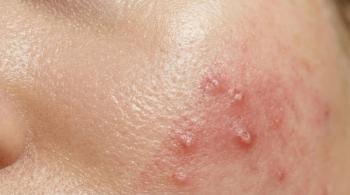
Molluscum contagiosum is a highly contagious viral skin infection that primarily affects children. It often coexists with AD in pediatric patients, with AD incidence being higher in patients with molluscum contagiosum compared to the general population.2 This dysfunction of the skin barrier often leads to increased viral susceptibility, prolonged episodes of molluscum contagiosum, and secondary infections.
Berdazimer gel, 10.3% containing berdazimer sodium, is a potential first-in-class topical antiviral therapy for molluscum contagiosum. Currently, it is not FDA-approved for any indication. According to the poster, “coadministration of berdazimer gel with a hydrogel releases nitric oxide from the berdazimer sodium macromolecule at the time and site of application.” This analysis assessed the safety and efficacy of berdazimer gel, 10.3% in 3 randomized controlled trials of patients with both molluscum contagiosum and AD.
Methods and Materials
B-SIMPLE 1, 2, and 4 were multicenter, randomized, double-blind, vehicle-controlled, parallel trials (NCTs: 03927716, 03927703, 04535531). Male and female patients ≥ 6 months of age were randomized to receive either the vehicle gel or berdazimer gel, 10.3%, once a day. Each participant began with 3 to 70 lesions at baseline. Parents and caregivers applied the product for 12 weeks, along with an additional 12-week safety period.
Phase 3 subgroup analysis was conducted in participants with and without AD. Of the 1596 patients, 13.4% had a history and/or co-occurrence of AD, which was less than expected, according to the investigators. These patients were slightly younger (mean age: 6.1 vs. 6.7 years) and had more baseline molluscum contagiosum lesions (26.4 vs. 19.3). Additionally, this subgroup was typically younger at the onset of molluscum contagiosum (4.3 years vs. 5 years).
The primary endpoint was the proportion of patients with complete clearance of treatable molluscum contagiosum lesions at week 12. The secondary endpoint was the proportion of patients with complete clearance of treatable molluscum contagiosum lesions at week 8. Local skin reactions and adverse events through week 24 were also evaluated.
Results
Berdazimer was superior to vehicle at week 12 with 35% of AD patients reaching complete clearance compared to 27.4% (95% CI 2.5–17.5, p = 0.01). Similar rates were seen in patients who did not have a history of AD (29.1% vs. 18.9%, p < 0.001). Over 44% of participants with AD reached ≥90% clearance at week 12 compared to 28.3% (p < 0.001). In patients without AD, 37.7% saw the same clearance rates versus 22.7% in the opposite group. The percent change from baseline was –54.0% vs –40.7% (p = 0.24) for those with a history of AD.
Regarding safety, berdazimer was well-tolerated in all patients, whether or not a history of AD was present. Those with AD had more treatment-emergent adverse events compared to those without (43.2% in the berdazimer group vs. 28.6% in the vehicle group). In vehicle-treated patients with AD, the rate of application site pain was 3 times higher (11.9% vs. 3.9%), but the rate of application-site dermatitis was 2 to 3 times higher in the entire cohort of AD patients, regardless of what therapy was used. In those treated with berdazimer who did not have AD, rates of application-site erythema were higher.
Conclusion
Overall, berdazimer gel, 10.3%, was effective in patients with molluscum contagiosum, even in those with a history of AD. However, those with AD were prone to experiencing more adverse effects, with mild to moderate application-site pain and erythema being the most common. The researchers concluded that underlying AD influenced the safety profile and “the presence of AD may mask berdazimer-induced pruritus and erythema.”
Reference
1. Browning J, Hebert A, Paller A, et al. Efficacy and Safety of Berdazimer Gel, 10.3% in a Phase 3 Subgroup of Patients with Molluscum Contagiosum and a History of Atopic Dermatitis. Poster presented at Maui Derm NP+PA Fall 2025, September 20-23, Nashville, Tennessee.
2. Olsen JR, et al. Molluscum contagiosum and associations with atopic eczema in children: a retrospective longitudinal study in primary care. Br J Gen Pract. 2016;66(642):e53-8. doi: 10.3399/bjgp15X688093.