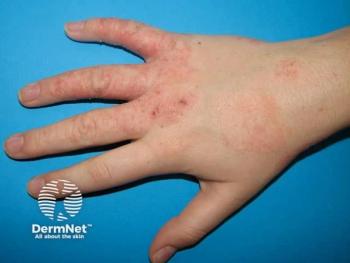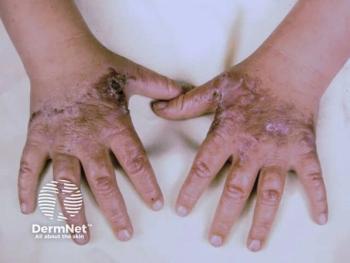
New review explores why eczema and ADHD often overlap in youth, highlighting sleep loss, itch-driven inflammation, plus screening and treatment tips.
The FDA has approved roflumilast 0.05% cream for atopic dermatitis in children aged 2 years and older, extending its use to a critical pediatric population.
This week, the US Food and Drug Administration (FDA)
In an interview with Dermatology Times, Lawrence Eichenfield, MD, professor of dermatology and pediatrics at the University of California, San Diego, and chief of pediatric dermatology at Rady Children’s Hospital, discussed the implications of the new indication and the data supporting it.
“There’s not usually an hour going by in my clinical practice that I don’t have questions raised about the utilization of topical corticosteroids for dermatitis patients and other inflammatory conditions, and a lot of concerns about adverse effects,” said Eichenfield. “And here we have approval of a specific product for a young age group where I think there’s a lot of clinical need.”
Roflumilast is a topical phosphodiesterase-4 (PDE4) inhibitor previously approved for psoriasis. The newly approved lower-strength 0.05% cream formulation was evaluated in children aged 2 to 5 years. The pivotal study assessed once-daily application over 4 weeks, focusing on investigator global assessment (IGA) improvement and disease clearance.
According to Eichenfield, the results demonstrated meaningful efficacy within a relatively short timeframe. “The clearance, which is clear or almost clear — at least a 2-step improvement from baseline moderate AD — was about 25% of the patients… compared to about 11% in the vehicle group,” he noted. Improvements were also observed at earlier time points, suggesting a rapid onset of action.
From a tolerability standpoint, roflumilast’s nonsteroidal mechanism offers a significant advantage for families concerned about the long-term risks of corticosteroids, such as skin atrophy and hypothalamic-pituitary-adrenal axis suppression. The cream’s once-daily dosing and low irritation profile further support its suitability for chronic pediatric use.
Eichenfield emphasized that this development adds to the expanding therapeutic landscape for AD, particularly in younger patients. The approval “provides clinicians with another topical option that can be used safely and effectively in children,” he said, aligning with a broader shift toward steroid-sparing regimens in long-term management.
As new nonsteroidal agents enter clinical practice, dermatologists may increasingly tailor therapy based on age, disease severity, and patient preference. Roflumilast’s demonstrated safety and efficacy in children as young as 2 years may help address a persistent gap in pediatric dermatologic care, offering an evidence-based, practical alternative to corticosteroids for mild to moderate atopic dermatitis.