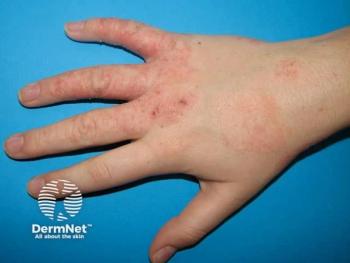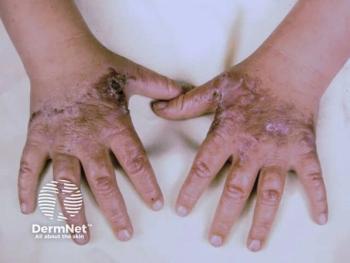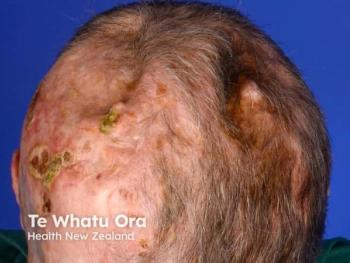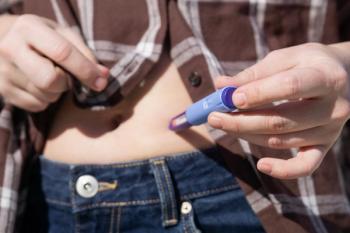
New review explores why eczema and ADHD often overlap in youth, highlighting sleep loss, itch-driven inflammation, plus screening and treatment tips.
Arcutis advances pediatric atopic dermatitis treatment with roflumilast cream, completing enrollment in key INTEGUMENT-INFANT trial.
Today, Arcutis Biotherapeutics, Inc. announced completion of enrollment in its INTEGUMENT-INFANT phase 2 clinical study, evaluating the safety and tolerability of roflumilast cream 0.05% (ZORYVE) in infants aged 3 months to less than 24 months with mild to moderate atopic dermatitis (AD).1
The trial builds upon findings from the earlier ARQ-151-105 Maximal Usage trial, which examined the pharmacokinetics of roflumilast cream in this same age group. Topline results are anticipated in early 2026.
“Atopic dermatitis often presents in infancy and can cause significant discomfort from the itch and rash, and even disruption to sleep and social activities, which can negatively impact the affected child and the entire family,” said Patrick Burnett, MD, PhD, FAAD, chief medical officer at Arcutis. “Enrollment in the INTEGUMENT-INFANT study has been brisk, reflecting strong interest from parents seeking an alternative to topical corticosteroids. This clinical milestone represents a significant step in advancing a well-tolerated topical treatment for this vulnerable population, for whom FDA-approved options remain limited. We eagerly anticipate the study results as we continue to develop ZORYVE cream 0.05% as a potential new treatment for pediatric atopic dermatitis in infants as young as three months.”1
A poster presented at the 2025 Society of Pediatric Dermatology meeting first outlined the design of the 4-week, open-label, single-arm trial.2 The primary objective of INTEGUMENT-INFANT is to evaluate the safety and tolerability profile of roflumilast cream 0.05% when administered once daily (QD) for 4 weeks. Secondary objectives include the assessment of various exploratory efficacy outcomes.
Participants will be infants aged 3 to 24 months with a clinical diagnosis of AD for at least 6 months prior to screening. Crucially, eligible infants must present with an Investigator’s Global Assessment (IGA) score of 2 (mild) or 3 (moderate) at baseline, indicating their disease severity. Furthermore, the body surface area (BSA) affected by AD must be between 5% and 20% at baseline.
The primary endpoint of the INTEGUMENT-INFANT study focuses on safety and tolerability. This will be comprehensively assessed through the monitoring of adverse events (AEs), changes in vital signs, and laboratory abnormalities throughout the 4-week treatment period. Physical examinations will also be conducted at each visit to further evaluate the safety profile.
In addition to safety, several exploratory efficacy endpoints will be evaluated at week 4 to gain preliminary insights into the potential therapeutic benefits of roflumilast cream in this population. These include:
“There's a large unmet need for non-steroid topical treatments in this population. So that's where roflumilast 0.05% cream would fit in very nicely as something that can not only treat the signs and symptoms of eczema in young infants, but also perhaps induce barrier repair, prolonged remissions, and adequate disease control. We're very much looking forward to it,” she said.
References
1. Arcutis Completes Enrollment in INTEGUMENT-INFANT Phase 2 Study Evaluating ZORYVE® (roflumilast) Cream 0.05% in Infants with Atopic Dermatitis. News release. Globe Newswire. Published November 13, 2025. Accessed November 13, 2025.
2. Hebert A, Eichenfield L, Gonzalez M, et al. INTEGUMENT-INFANT: 4-week open-label safety of roflumilast cream 0.05% in 3-24-month-olds with atopic dermatitis. Poster presented at: The Society for Pediatric Dermatology Meeting 2025. July 23-26, 2025. Seattle, Washington.