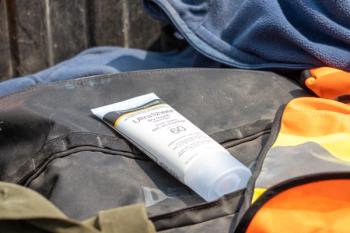
Two new Neutrogena facial sunscreens incorporate bemotrizinol, the first new sunscreen active ingredient added to the US OTC monograph in decades.
An early look at the finalized print issue—featuring key data, clinical takeaways, and expert insights before it reaches your mailbox.
“That first patient that I see… I hope I can draw things from this conference and have better outcomes.” — David Oberlin, MD, FAAD
If the
Before you dive in, don’t forget to
Oral therapies are drawing new attention—not just for convenience, but for performance. Data on next-generation TYK2 inhibitors, including envudeucitinib (ESK-001; Alumis) and zasocitinib (TAK-279; Takeda), suggest efficacy levels that begin to challenge long-standing assumptions about the oral–biologic divide. Meanwhile, novel approaches like icotrokinra (Icotyde; Johnson & Johnson) hint at alternative delivery strategies that could further expand patient choice.
In 12 months, where do you see high-efficacy orals fitting in PsO?
What remains unanswered, and explored in full in this issue, is how these agents will perform in biologic-experienced patients and where they will ultimately land in treatment algorithms.
HS management may be approaching its own turning point. Long-term and late-breaking data on IL-17–targeted therapies such as bimekizumab (Bimzelx; UCB) and sonelokimab (Moonlake) suggest not just improved response rates, but evolving expectations around durability and depth of response.
Early signals point toward a shift from incremental improvement to more ambitious targets—but how far that shift will go remains an open question.
“If you don’t get inflammation under control early, damage becomes irreversible,” noted Kristian Reich, MD, PhD.
Whether remission becomes a realistic, sustained goal is a central theme explored in the full feature.
New data on amlitelimab (Sanofi) introduce a different therapeutic angle—targeting earlier stages of immune activation. Early results suggest a balance of efficacy and extended dosing intervals that may appeal in real-world settings.
How this mechanism compares with existing systemic options—and where it may fit—remains to be seen.
Additional highlights from AAD 2026 point to continued expansion across dermatology:
When assessing high-risk nonmelanoma skin cancer, what matters most?
Across disease states, the direction is consistent: more options, higher expectations, and increasing emphasis on how therapies integrate into real-world care. As editor-in-chief Christopher Bunick, MD, PhD, highlights throughout this issue, the next phase in dermatology may be defined less by breakthrough efficacy and more by how seamlessly those advances translate into practice.
This preview only scratches the surface. In the full issue, we examine what these developments mean for sequencing, patient selection, and long-term management strategies.