

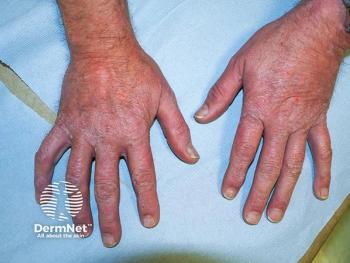
Elderly patients show lower and more mild patch test reactivity than younger individuals, with different sensitization patterns.
Elderly patients show lower and more mild patch test reactivity than younger individuals, with different sensitization patterns.
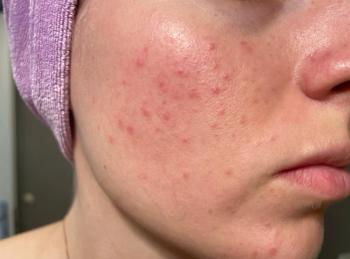
Global acne burden in reproductive-age women has risen significantly, with greater increases expected by 2040.
Experts share how this year's RAD Conference showcased cutting-edge advancements in atopic dermatitis to enhance patient care and treatment strategies.

Hershel Dobkin, MD, FAAD, shares his experiences and the surprising reasons behind clinic delays, from patient needs to unexpected moments.

Catch up on dermatology news, highlights, and insights from the past 24 hours.

Jacki Kment, PA-C, MPAS, DFAAPA, shares how she built a successful direct pay dermatology practice to prioritize patient care and professional balance.
New survey data reveals gaps in atopic dermatitis treatment for pregnant women, highlighting the need for updated guidelines and better physician education.

Rigorous pre-, intra-, and postoperative protocols help ensure safe, effective periocular laser treatments and reduce the risk of ocular complications.
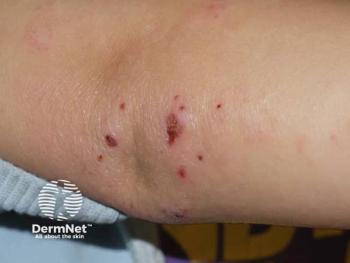
Abrocitinib significantly improves lesion severity and pruritus in moderate to severe AD, offering a promising treatment option for patients.

Our July cover story explores effective treatments for hidradenitis suppurativa, including procedural interventions and advanced therapies that enhance patient quality of life.

Art transforms dermatology by fostering dialogue, enhancing patient connection, and challenging biases, as medical students explore creative expression in health care.

Catch up on dermatology news, highlights, and insights from the past 24 hours.
With longer visits and flat-rate pricing, Kment’s practice provides personalized dermatologic care to both insured and uninsured patients.

A first-of-its-kind study reveals artificial intelligence (AI)-driven insights on hair loss trends, highlighting the impact of genetics, hormones, and COVID-19 on alopecia.

A systematic review reveals significant Treg cell deficiencies in vitiligo, highlighting their role as therapeutic targets for improved treatment strategies.
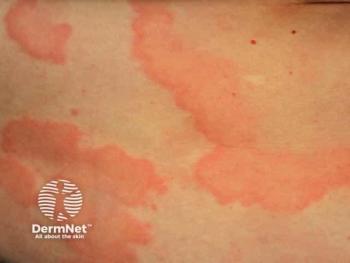
Explore how genetic factors influence acute and chronic urticaria, revealing potential for personalized treatment strategies.

Aesthetic medicine embraces a holistic approach to skin quality, defining it through measurable categories that enhance personalized treatment strategies.

Discover how trifarotene, a novel retinoid, effectively addresses adult acne and its long-term effects, enhancing skin health and quality of life.

This review of the latest dermatologic studies includes insights into ocular safety during laser procedures, radiation dermatitis prevention and management, and more.

Catch up on dermatology news, highlights, and insights from the past 24 hours.

Renata Block, DMSc, MMS, PA-C, interviews Amy Snow, PA-C, who shares how she transformed career roadblocks into a mobile dermatology clinic delivering free care and hope across Oregon.
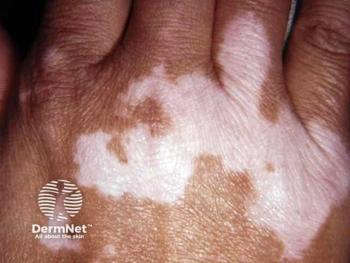
A recent study reveals distinct patterns of nonsegmental vitiligo lesions on hands.

For pregnant women, formulations with niacinamide, vitamin E, hyaluronic acid, and peptides may help support barrier function and reduce pigmentation without compromising safety.

Find out what skin care products and aesthetic innovations clinicians are recommending to patients for the month of July.
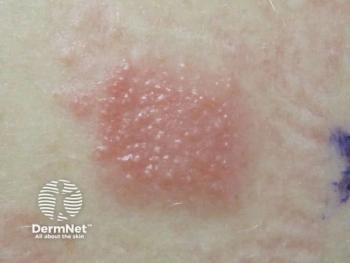
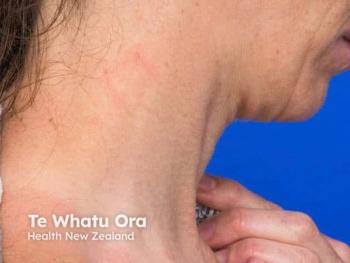
New insights reveal shared and allergen-specific immune responses in allergic contact dermatitis.

At a recent Dermatology Times Case-Based Roundtable event, David Cotter, MD, PhD, reviewed treatment considerations for older patients with moderate to severe PsO who are candidates for biologic therapy.

Haut.AI has launched the SPF Truth Booth and SPF Protection Power List, using AI to promote sun safety and personalized patient insights.

Catch up on dermatology news, highlights, and insights from the past 24 hours.
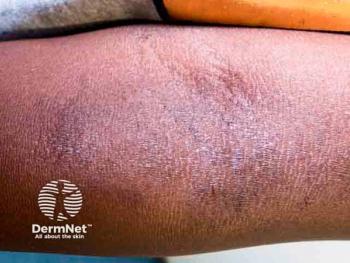
Turn Therapeutics initiates a groundbreaking clinical trial for GX-03, the first topical IL-36 inhibitor targeting moderate to severe eczema.
Both regulatory-approved and pipeline treatments for moderate to severe HS demonstrate comparable efficacy and safety, offering hope for patients often dissatisfied with current treatment options.