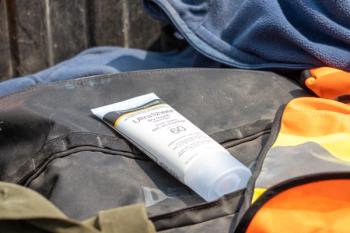
Two new Neutrogena facial sunscreens incorporate bemotrizinol, the first new sunscreen active ingredient added to the US OTC monograph in decades.
Explore the top headlines of the week, including insights on the latest clinical trials, therapeutic updates, and more.
To stay up to date with the latest dermatology news, sign up to receive our
In a recent interview with Dermatology Times, Jason Hawkes, MD, provided an in-depth look at the potential role of dupilumab (Dupixent; Sanofi and Regeneron Pharmaceuticals) in the management of chronic spontaneous urticaria (CSU), a condition with limited therapeutic options over the past decade. As new clinical data emerges, clinicians may soon find themselves at the forefront of treating this complex inflammatory skin disease.
Recent data has analyzed global trends in acne burden in young women of reproductive age over the last 31 years. The burden has risen in all age groups and will continue to grow, with a forecast up to 2040. Results were extracted from
“The growing availability of high-quality datasets, such as the GBD Study, provides unprecedented opportunities to assess disease distribution, trends, and determinants across populations. While acknowledging the limitations of modeled estimates—particularly in data-scarce regions—GBD remains the most comprehensive source for understanding global health patterns,” the researchers wrote.
Rolf-Markus Szeimies, MD, external advisor for German-based Kiyomi Skin and Vice President of the European Society for Photodynamic Therapy in Dermatology, brings decades of clinical insight into the evolving role of 5-aminolevulinic acid (5-ALA) in skin care. Traditionally confined to photodynamic therapy for actinic keratoses and other medical indications, 5-ALA is now emerging as a novel active ingredient in topical formulations, offering mitochondrial and epidermal benefits without phototoxicity. In this exclusive interview with Dermatology Times, Szeimies discussed the scientific advancements behind
ME3183, a novel oral phosphodiesterase 4 (PDE4) inhibitor, has been evaluated in a phase 2 trial of patients with moderate to severe plaque psoriasis. The drug, particularly the dosages of 7.5 mg twice a day and 15 mg once a day, saw rapid and sustained effects after 16 weeks with an acceptable safety profile. With 4 million cases of psoriasis globally, there is an unmet need for additional oral psoriasis medications with both strong efficacy and safety, according to the study authors.