

Panelists share parting advice and key takeaways on the optimal management of atopic dermatitis within the treatment landscape.

Peter A. Lio, MD, is a clinical assistant professor of dermatology and pediatrics at Northwestern University Feinberg School of Medicine in Chicago, Illinois.
Panelists share parting advice and key takeaways on the optimal management of atopic dermatitis within the treatment landscape.
Experts share insight on the challenges inherent in treating patients with atopic dermatitis despite recent advances in therapy.
Concluding their focused discussion on JAK inhibitors in atopic dermatitis, panelists share advice on the optimal selection based on route of administration and use of these agents.
A brief review of 2 oral JAK inhibitors recently approved for patients with atopic dermatitis.
A panel of experts review the use of topical ruxolitinib in atopic dermatitis, shedding light on safety and efficacy considerations.
Focusing on JAK inhibitors, panelists consider the historical use of these agents in atopic dermatitis and their corresponding mechanisms of action.
Experts define stages of atopic dermatitis and share insight on the conventional treatment landscape for mild to moderate and moderate to severe atopic dermatitis.
Expert perspectives on the nature of atopic dermatitis, ranging from diagnosis and pathophysiology to the clinical and social burden it places on patients.
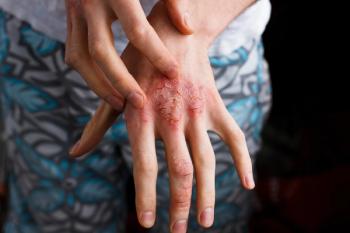
In our first Irregular Borders column, Peter A. Lio, M.D., explores the evidence for leaky gut and its relevance in dermatology while highlighting parallels with impaired skin barrier function in conditions such as atopic dermatitis.

Healthcare disparities exist in all fields of medicine, including dermatology. We seek to address these disparities in this article by outlining the differences in epidemiology, presentation, access and outcomes of five conditions in patients with skin of color.

In this article, Dr. Peter A. Lio discusses how recent advances in atopic dermatitis have led to a new standard of care, which aims to keep patients clear safely and maximize improvements in quality of life.

Some unconventional therapies for rosacea get to the root of the problem, with apparent positive impacts on inflammation, skin barrier dysfunction and vascular function.
There seems to be renewed interest in coconut and other natural oils, with topics as far-flung as using coconut oil as a sunscreen (spoiler: it didn’t work very well!) Here, we’ll tell you where it does show promise.
Safe, inexpensive, and widely available, sunflower oil seems a reasonable consideration for any patient with impaired skin barrier, so long as there is not a known sunflower seed allergy.
There is increasing interest in so-called alternative medicine. Both patients and practitioners are clearly interested in this domain and this is in striking contrast to the bright, shining edifice of evidence-based medicine.