Can “Botox in a bottle” really rival injectable neuromodulators? We examine the evidence behind topical peptide serums and Argireline.
Does "flooding" with 5 to 7 products every night really hydrate the skin or is it just a myth? Read more about the latest social media trend and learn how to counsel your patients in the clinic.
From viral skin care hacks to trendy treatment devices, social media is shaping the questions patients bring into the exam room every day. In Dermatology Times’ new weekly series, Social Media Mythbusters, we break down trending claims clinicians are hearing in practice—exploring the proposed mechanism, what the evidence shows (or doesn’t), and whether each trend holds up under scrutiny.
In this edition, we’re examining the nightly routine of “flooding” your skin with multiple products.
Have a social media trend you’d like us to investigate next? Send us the social media myths your patients are asking about, and we may feature them in an upcoming edition. Connect with us on our
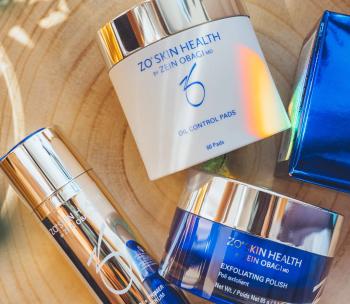
Skin flooding describes the practice of applying multiple hydrating products in quick succession onto damp skin, typically a hydrating toner or mist, followed by one or more humectant-rich serums (most often hyaluronic acid), and sealed with a moisturizer or occlusive. The overall goal is to saturate the skin with as much moisture as possible. Content framing often implies this is a novel discovery, with dramatic before/after "glass skin" results attributed to the sheer number of product layers involved.
What distinguishes this trend from most is that it isn't a new mechanism dressed up as a discovery; it's established moisturization science, repackaged and renamed. The individual components (humectant, applied to damp skin, sealed with an occlusive) map almost exactly onto the classic dermatologic framework for effective moisturization that predates the trend by decades. The genuinely useful clinical question isn't whether the underlying principle works but whether "flooding" with multiple sequential products offers any real advantage over a single well-formulated moisturizer, and where the trend's disregard for skin type and product order can actively work against patients.
Effective topical moisturization has long been described using a 3-component framework: a humectant to attract water, an emollient to smooth and fill gaps between corneocytes, and an occlusive to physically slow transepidermal water loss (TEWL) by forming a barrier over the skin surface. Skin flooding is, mechanistically, this same 3-piece principle executed as separate sequential products rather than a single formulated moisturizer—toner or essence supplying initial surface moisture, humectant serum drawing water to the stratum corneum, and a final moisturizer or oil supplying the occlusive seal. Applying humectant-containing products to damp rather than dry skin is itself a long-standing, evidence-informed recommendation, since it gives the humectant a nearby water source to bind before it evaporates.
The most clinically important nuance in this trend is one that most consumer content gets partially right but frames incompletely: humectants like hyaluronic acid and glycerin only reliably draw water from the ambient environment at relative humidity above roughly 70%; below that threshold, they more commonly draw water from the deeper epidermis and dermis instead, and can measurably increase TEWL if left unsealed.1 This means the sequencing and completion of the routine (ending with an occlusive, not stopping at the humectant layer) is not an optional styling choice but the mechanistic step that determines whether "flooding" hydrates the skin or paradoxically dehydrates it by pulling water up from below and then losing it to the air.
📊 POLL: Had you heard of the term "skin flooding" before it went viral?
A randomized, assessor-blinded, intra-subject study evaluated a formulation combining hyaluronic acid 1%, glycerin 5%, and Centella asiatica extract, finding measurable improvements in skin hydration and barrier function sustained over a 24-hour period when applied as a single moisturizing fluid.2 This supports the core mechanism the trend is built on—humectant-plus-supportive-ingredient formulations do produce real, measurable, sustained hydration gains—without requiring the specific multi-product sequential-layering ritual the trend prescribes to achieve that outcome.
On the occlusive side, petrolatum remains the best-characterized and most effective occlusive ingredient available, reducing transepidermal water loss by close to 99% in controlled measurement, a figure worth having on hand when patients ask why the "sealing" step matters as much as (or more than) the humectant step they're most drawn to. Taken together, the available evidence supports the mechanism thoroughly but offers no data suggesting that multiple sequential humectant layers outperform a single well-formulated humectant-plus-occlusive product, because the rate-limiting step for hydration retention is adequate occlusion, not humectant volume.
However, the claim that more layers or more products produce proportionally more hydration is not supported by the underlying mechanism. Once the stratum corneum's available binding capacity and the occlusive seal are accounted for, additional humectant layers largely offer diminishing returns rather than cumulative benefit, and many modern moisturizers already combine humectant, emollient, and occlusive components in a single formulation that accomplishes the same physiologic goal without a 5 to 7-step ritual. The trend's frequent framing as universally appropriate for "everyone, even oily and breakout-prone skin" is also not well supported: repeated layering of multiple products, particularly with heavier or fragranced formulations, increases the surface area for potential comedogenic and irritant exposure in patients prone to acne or sensitivity, an established concern dating to the original description of acne cosmetica and reaffirmed in more recent re-evaluations of comedogenicity risk from finished cosmetic formulations rather than isolated ingredients.3,4 Patients with active rosacea, eczema, or a compromised barrier are a similarly poor fit for an unmodified multi-layer routine, since fragrance and preservative load scale with the number of products stacked on the skin, independent of any hydration benefit.
Is this a myth? No!
Skin flooding is one of the more mechanistically sound trends out there: the humectant-then-occlusive-on-damp-skin sequence is genuinely evidence-supported moisturization practice, and the underlying physiology, including the low-humidity humectant paradox, is well characterized in the dermatologic literature.
Where the trend earns a caveat rather than a clean pass is in its universal, more-is-better framing—the evidence supports the principle, not the specific claim that stacking multiple sequential products outperforms a single well-formulated moisturizer, and the trend's disregard for skin type introduces real congestion and irritation risk for oily, acne-prone, or barrier-compromised patients that the "for everyone" marketing doesn't acknowledge.
If a patient comes in wanting to try an extensive flooding routine, here are some important points to hit:
[Social Media Mythbusters is intended for dermatology clinicians. Evidence summaries reflect available literature at the time of publication and do not constitute clinical guidelines.]
References
1. Harwood A, Nassereddin A, Krishnamurthy K. Moisturizers. [Updated 2024 Feb 12]. In: StatPearls [Internet]. Treasure Island (FL): StatPearls Publishing; 2026 Jan-. https://www.ncbi.nlm.nih.gov/books/NBK545171/
2. Milani M, Sparavigna A. The 24-hour skin hydration and barrier function effects of a hyaluronic 1%, glycerin 5%, and Centella asiatica stem cells extract moisturizing fluid: an intra-subject, randomized, assessor-blinded study. Clin Cosmet Investig Dermatol. 2017;10:311-315. Published 2017 Aug 11. doi:10.2147/CCID.S144180
3. Kligman AM, Mills OH Jr. "Acne cosmetica". Arch Dermatol. 1972;106(6):843-850.
4. Maarouf M, Saberian C, Shi VY. Myths, Truths, and Clinical Relevance of Comedogenicity Product Labeling. JAMA Dermatol. 2018;154(10):1131-1132. doi:10.1001/jamadermatol.2018.1741