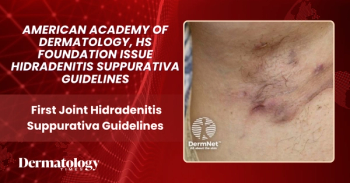
The joint AAD-HSF guideline issues 37 recommendations, including strong support for adalimumab, bimekizumab, infliximab, and secukinumab.
This Rosacea Awareness Month, take a look at previous coverage from 2024.
Journey Medical Corporation announced in January 2024 that it submitted a New Drug Application (NDA) to the US Food and Drug Administration (FDA) for oral DFD-29 for the treatment of erythema and inflammatory lesions in patients with rosacea.
DFD-29, or minocycline hydrochloride modified release capsules, are being developed in collaboration with Dr. Reddy's Laboratories Ltd. The filing is supported by positive data from 2 phase 3 clinical trials.
Each clinical trial achieved its established primary and secondary endpoints. In patients with rosacea, DFD-29 exhibited statistically significance via Investigator's Global Assessment treatment success, a reduction in the total number of inflammatory lesions, and a reduction in Clinician's Erythema Assessment. DFD-29 exhibited superiority over both placebo treatment and 40 mg Oracea (doxycycline) tablets. If approved by the FDA, DFD-29 has the potential to become the only oral, systemic therapy approved to address both erythema and inflammatory lesions associated with rosacea, as well as a best-in-class therapeutic option for this indication.1
A recent study published in Skin Research and Technology delved into the correlation between perimenopause and the incidence and severity of rosacea in middle-aged women, exploring the potential role of hormonal changes, specifically estrogen levels, in the pathogenesis of rosacea. The observational study, conducted at the dermatology outpatient department of West China Hospital, spanned from January 2022 to January 2023.
Fifty-nine perimenopausal women with rosacea were enrolled, meeting specific diagnostic and inclusion criteria. Dermatology Quality of Life Index, Rosacea-specific Quality-of-Life instrument, and the Hospital Anxiety and Depression Scale were employed to assess patients' quality of life, anxiety, and depressive states, respectively. Blood samples were collected to measure estradiol, follicle-stimulating hormone, and testosterone levels.
The study revealed a significant impact of rosacea on the quality of life of perimenopausal women, with high rates of anxiety and depression.2
The
In previous surveys, the NRS notes that 66% of patients with rosacea reported the ability to name specific skin care or cosmetic products as triggers for symptoms. Furthermore, 84% of patients expressed an interest in guidance regarding skin care product selection and use.
“One of the most common requests the NRS receives from rosacea patients is for information and advice about which skin care and cosmetic products are appropriate to use,” said Andrew Huff, president and executive director of the NRS, in a news release. “We are pleased to offer this resource to rosacea sufferers by recognizing products that have been shown to be unlikely to cause irritation or a flare-up.”
Last year, the
Jim Del Rosso, DO, FAAD, clinical researcher in Las Vegas, Nevada, caught up with Dermatology Times at the 17th Annual
In addressing the complexities of acne and rosacea, Del Rosso underscored the need to go beyond traditional therapies. "It's more than just the medications," he noted. "We have some new devices and more and more that's coming in in terms of skincare." However, he emphasizes that the integration of these innovations into existing treatments requires careful consideration.
Concerns about antibiotic resistance in acne treatment have prompted Del Rosso to explore alternative options. "If we want to get rid of antibiotics in acne, we have to come up with other options," he said, recognizing the urgency of finding viable substitutes. While acknowledging the existence of potential alternatives, he acknowledges that a comprehensive solution is still in progress.
"New therapeutic options for chronic skin conditions, especially rosacea, are always needed. An oral option that targets lesions and erythema will be a welcome choice for many patients who can't achieve therapeutic results with topicals or that can work synergistically to receive optimal management of a disease that can be a burden to so many," said Renata Block, MMS, PA-C, a board-certified physician assistant at SKIN Dermatology in Munster, Indiana, and a Dermatology Times Editorial Advisory Board member.
According to Srinivas Sidgiddi, MD, vice president of research and development at Journey Medical, the NDA submission is based on positive data from 2 phase 3 clinical trials evaluating DFD-29 for the treatment of rosacea. Both phase 3 clinical trials achieved all co-primary and secondary end points. Additionally, no significant safety issues were identified during the 16-week treatment. In both studies, DFD-29 demonstrated statistically significant improvement compared to the current standard-of-care treatment of doxycycline (Oracea) 40mg capsules and placebo regarding Investigator’s Global Assessment treatment success and the reduction in total inflammatory lesion counts.4
A recent study shed light on a potential factor in the pathophysiology and treatment routes for rosacea: calcitonin gene-related peptide (CGRP). The study, published in the Journal of the European Academy of Dermatology and Venereology, compared plasma levels of CGRP in patients with rosacea versus in otherwise healthy controls, finding elevated levels of CGRP in individuals with rosacea.
CGRP, known for its role in vasodilation and inflammation, has gained attention as a possible mediator in rosacea in recent years. Triggered by factors such as capsaicin, CGRP is implicated in neurogenic vasodilation and immune modulation.
Researchers hypothesized a link between elevated CGRP levels and rosacea, drawing parallels between rosacea and migraine, both of which share common triggers and pathophysiological, molecular, and therapeutic aspects. Participants in this study were selected from outpatient clinics and online interest groups. Patients were eligible for participation if they were between 18 and 65 years of age and met diagnostic criteria for rosacea, including having features of rosacea for a minimum of 1 year prior to examination and with features currently evident at the time of blood sampling.5
Through initiatives like Rosacea Awareness Month, the medical community aims to shed light on the condition's complexities, reduce stigma, and empower individuals to seek appropriate care.
As we delve into this awareness month, Dermatology Times remains committed to educating and engaging our audience with weekly quizzes aimed at increasing understanding and promoting proactive management strategies. Throughout the month of April, we will be sharing 5-question quizzes each Monday designed to test knowledge on rosacea symptoms, triggers, treatment options, and lifestyle management strategies.
Each quiz will cover different aspects of rosacea, drawing from the latest research and expert insights. In addition to the weekly quizzes, Dermatology Times will recap the answers later in the week, providing detailed explanations and additional resources for further learning.
According to the
Furthermore, a report most recently updated in August 2023 notes that the worldwide incidence of rosacea is upwards of 5% of the global population. In 2018, the NRS shared details of a study indicating that approximately 415 million individuals are affected by rosacea globally.
April is Rosacea Awareness Month, and Dermatology Times is spotlighting a variety of resources to share with your patients. If you have a specific resource or association that you recommend to patients with rosacea, email us at
What does Rosacea Awareness Month mean to you as a clinician? Email us at
References