


Opinion|Videos|July 8, 2024
Optimizing Management of Atopic Dermatitis and Alopecia Areata: From First-Line to Second-Line Treatments and Safety Protocols
Author(s)Robert Bruce Posnick, MD
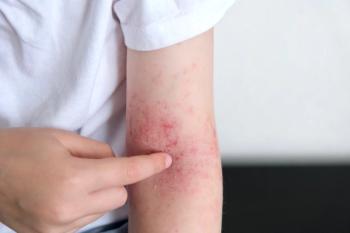
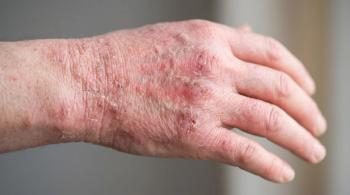
Robert Bruce Posnick, MD, examines a case of a 55-year-old female patient with a 50-year history of atopic dermatitis, comorbid asthma, and severe alopecia areata, presenting with recurrent patches throughout her body, predominantly affecting her face, hands, trunk, arms, legs, and eyelids.
Advertisement

- What is your impression of this case? What challenges does this case present with, if any?
- What co-morbidities do you typically see with Atopic Dermatitis?
- Given her history, would you treat systemically? If so, oral JAK or injectable biologic?
- Would you consider a topical JAK, ie ruxolitinib? If so, any concern using topical JAK in combo with systemic therapy, if so which ones?
Advertisement
Related to this article

A retrospective claims analysis of 2897 matched pairs found hazard ratios of 0.48 to 0.67 for new atopic disease with dupilumab vs systemic corticosteroids in children.

SYX-5219 improved disease severity and itch in a Phase 1b trial of adults with moderate to severe atopic dermatitis.
Christophe Piketty discusses 3-year ARCADIA data demonstrating sustained efficacy and long-term safety of nemolizumab in atopic dermatitis.
No skin lesion flares were observed through 16 weeks after switching from dupilumab to upadacitinib; itch flares occurred in 3.6% to 4.8% of patients with baseline WP-NRS scores of 6 or lower.

Three-year ARCADIA LTE data show sustained skin clearance and itch control with nemolizumab in moderate-to-severe atopic dermatitis.

Upadacitinib showed broader inflammatory effects and earlier skin barrier restoration than dupilumab in atopic dermatitis.
Advertisement
Advertisement
Trending on Dermatology Times
1
Bitopertin Meets All End Points in Phase 3 APOLLO Trial for EPP
2
Social Media Mythbusters: Can Castor Oil Really Grow Hair?
3
EADV 2026 Atopic Dermatitis Highlights: Tilrekimig, RAC2 Inhibition, and Level Up Data
4
Dupilumab Associated With Lower Atopic March Risk in Pediatric Atopic Dermatitis
5