A retrospective claims analysis of 2897 matched pairs found hazard ratios of 0.48 to 0.67 for new atopic disease with dupilumab vs systemic corticosteroids in children.
Melasma, challenging due to varied pigmentation in different skin types, requires personalized, tailored care.
Melasma, complex and often persistent in nature, poses significant diagnostic and treatment challenges, particularly for patients with darker skin types.
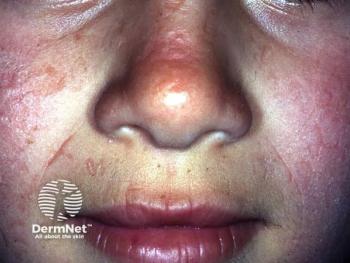
This hyperpigmentation presents differently depending on the individual’s skin tone, typically causing dark brown patches in individuals with lighter skin types, or gray-brown patches in patients with skin of color. Its pathogenesis, an overproduction of pigmentation by melanocytes in the skin, is a process more pronounced in individuals with darker skin tones due to higher melanocyte density.1
It is crucial to navigate these complexities to provide effective care while managing patient expectations.
This article explores the primary challenges, recent advances, and future directions in melasma research and treatment, with insights from Tracee Blackburn, PA-C, a board-certified physician assistant serving residents of Chicago, Illinois, at Medical Dermatology Associates of Chicago.
For patients with melanin-rich skin, uneven skin tone is a common concern, often leading to consultations for hyperpigmentation. Differentiating melasma from other hyperpigmentation causes is challenging due to overlapping clinical features.1,2
“Patients want to know the what, when, how, and why,” Blackburn said. “One of the primary challenges in treatment is informing the patient that melasma itself is challenging to treat. It is a multifactorial condition stemming from genetics, hormonal changes, UV exposure, and more.”
An extensive patient history is crucial to accurate diagnosis. Providers must ask detailed questions about the onset, progression, and potential triggers of pigmentation changes.
Despite the prevalence of melasma in darker skin types (frequently observed in regions such as Latin America, Asia, the Middle East, and Northern Africa),3 clinical trials often lack diversity. Most documented treatments for melasma have utilized chemical methods, laser therapy, and topical creams. However, these treatments often have limited effectiveness due to adverse effects, particularly in individuals with darker skin types (Fitzpatrick types IV-VI).4 This gap hinders the development of tailored treatments.
“I don’t believe there have been any recent trials specifically for darker skin tones,” noted Blackburn.
Barriers to care include misdiagnosis and lack of awareness about specialized dermatological care, she noted. Patients may self-diagnose as having general hyperpigmentation and seek ineffective over-the-counter treatments.
Dermatologists and researchers must enhance educational efforts and outreach to encourage participation in clinical trials, Blackburn added. Social media can play a pivotal role in disseminating accurate information and encouraging early professional consultation.
While hydroquinone remains a gold standard treatment for melasma, its long-term use is limited due to potential adverse effects, such as irritation, erythema, inflammation, allergic contact dermatitis, and more.5 Over the years, combination therapies have been emerging as more effective alternatives.
“There is not just 1 treatment that will help; combination treatment options are the best,” Blackburn said. “I recommend more tinted SPF [sun protection factor] for my patients because it contains iron oxide that has greater protection against UV-A and visible light.”
Azelaic acid, a staple in melasma treatment, continues to show promise, while new products such as La Roche-Posay Mela B3 serum are gaining traction for their efficacy in addressing epidermal pigmentation.5 For stubborn cases, oral supplements like Heliocare (containing polypodium leucotomos) and oral tranexamic acid are beneficial, Blackburn added.
“Continuous treatments, including laser options and chemical peels, show promising results but require ongoing sessions,” she said. These treatments must be customized to the patient’s skin type and severity of melasma.
The February 2024 issue of the Journal of the American Academy of Dermatology highlighted the scarcity of recent clinical research in skin of color.6
Blackburn pointed out, “Every patient is different, and the protocols are created on a case-by-case basis.” More comprehensive studies are needed to establish standardized treatment guidelines.
Future research should focus on environmental factors influencing melasma. According to Esposito et al, exposure to oxidative stressors such as UV radiation, air pollution, and sleep deprivation can exacerbate melasma.6 Community-engaged research can provide valuable insights into these environmental impacts and promote more inclusive study designs, Blackburn added.
Effective management of melasma in patients with darker skin types requires a nuanced understanding of the condition’s multifactorial nature. Clinicians should take the time to gather detailed patient histories, set realistic expectations, and stay informed about emerging treatments.
By addressing barriers to inclusive clinical trials and focusing on future research, dermatologists can improve outcomes for all patients affected by this challenging condition.
References
about 2 years ago
I Used Botulinum Toxin for Migraines—Now I’ve Been Suedabout 2 years ago
Approvals Expand Treatment Optionsabout 2 years ago
Is OX40 Inhibition the Next Game Changer for Atopic Dermatitis?about 2 years ago
Hair-Raising Challengesabout 2 years ago
Back to School, Back in the Spotlightabout 2 years ago
Journal Digest: August 5