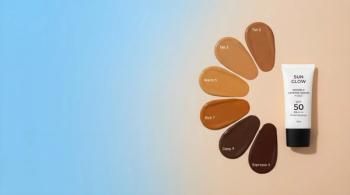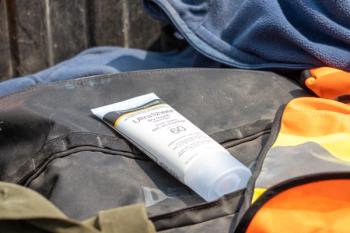
Two new Neutrogena facial sunscreens incorporate bemotrizinol, the first new sunscreen active ingredient added to the US OTC monograph in decades.
Discover how hotel shampoos, conditioners, and body washes contribute to allergic contact dermatitis, revealing significant regional differences in allergen prevalence.
As geographical variations can impact differences in allergen exposure, recent research has demonstrated a reduced prevalence in Europe and a rise in North America.1 Previously, there has been limited information available on the allergen content in complimentary hotel products. Shampoos, conditioners, and body washes are often the cause of allergic contact dermatitis in patients.
A new study analyzed the contact allergens commonly found in personal care products provided by hotels in Canada, the US, and Europe.2 In this research, a high percentage of core allergens were detected in personal care products in Canadian and American hotels, compared to those in Europe
A cross-sectional analysis of 270 complementary personal care items was conducted from January to March 2024. These came from 90 hotels (30 from each region) categorized by luxury, mid-scale, and budget-friendly via the Smith Travel Research database. Ingredient lists were sourced directly from the hotels or their product suppliers and then compared to core allergens, as identified by the 2020 American Contact Dermatitis Society series.3 Investigators maintained variation among hotel chains, product brands, and cities/regions to prevent overrepresentation.
Fragrance was found in 96.7% of shampoos, 93.3% of conditioners, and 96.7% of body washes in American hotels. In Canadian hotels, fragrance was also the most common allergen and was detected in 100% of shampoos, 96.7% of conditioners, and 93.3% of body washes. Similar patterns were detected in Europe (100% of shampoos and conditioners; 96.7% of body washes). Other common allergens in all 3 product categories included Cocamidopropyl Betaine (CAPB), sodium benzoate, phenoxyethanol, cetyl stearyl alcohol, Benzalkonium chloride, and tocopherol. Interestingly, in Europe, a higher percentage of luxury hotels offered products containing phenoxyethanol compared to budget hotels (p < 0.005).
Methylchloroisothiazolinone/methylisothiazolinone (MCI/MI), a leading cause of contact allergy, was found in only 4.4% of hotel products in Europe: 2 body washes, 1 shampoo, and 1 conditioner. Conversely, MCI/MI was found in 47.8% and 40% of Canadian and American hotels, respectively (p < 0.0001). A higher percentage of budget and mid-scale hotels in the US and Canada offered products containing MCI/MI than luxury-brand hotels (p < 0.001). Europe has more stringent regulation of MI in particular, which the authors infer has led to the decreased prevalence of contact allergy compared to North America.
“Although the exact concentrations of MCI/MI were not specified on most hotel product ingredient labels, the heightened awareness of contact allergies to MCI/MI and MI might contribute to their reduced prevalence in Europe,” they added.
DMDM hydantoin, a formaldehyde-releasing preservative with antimicrobial properties, was identified in about 1 in 7 products in the US and Canada. It was completely absent in toiletries from European hotels. (Canada vs. Europe: p = 0.01; US vs. Europe: p = 0.02). In Europe, the concentration of formaldehyde releasers must not exceed 0.001% in both leave-on and rinse-off products, while Canada permits concentrations of up to 0.2%. Sensitization rates to DMDM hydantoin have been reported at 4.7% in the US and 0.4% in Europe.4
For patients prone to contact allergies, clinicians should be more aware of these allergen levels as they may adversely impact guests during their hotel stays and travel plans. The authors recommend advocating for improved product labeling and further legislation in all regions, particularly in the US and Canada, to reduce or eliminate common contact allergens. The researchers also believe that hotels should consider offering low-allergen products to accommodate guests in this population.
References
1. Reeder MJ, Warshaw E, Aravamuthan S, et al. Trends in the Prevalence of Methylchloroisothiazolinone/Methylisothiazolinone Contact Allergy in North America and Europe. JAMA Dermatol. 2023;159(3):267-274. doi:10.1001/jamadermatol.2022.5991
2. Viltakis V, Kirchhof MG. A Cross-Sectional Study of Contact Allergens in Hotel Personal Care Products in Canada, the United States and Europe. Contact Dermatitis. Published online November 21, 2025. doi:10.1111/cod.70057
3. Schalock PC, Dunnick CA, Nedorost S, et al. American Contact Dermatitis Society Core Allergen Series: 2020 Update. Dermatitis. 2020;31(5):279-282. doi:10.1097/DER.0000000000000621
4. Yim E, Baquerizo Nole KL, Tosti A. Contact dermatitis caused by preservatives. Dermatitis. 2014;25(5):215-231. doi:10.1097/DER.0000000000000061