


News|Videos|November 8, 2025
Harrison Nguyen, MD, MBA, MPH’s Deep Dive into CSU, Vasculitis, and Autoimmune Blisters
Key Takeaways
- Nguyen emphasized the dual-pathway mechanism in CSU, involving both IgE and IgG-mediated activation, influencing therapeutic responses.
- Cutaneous vasculitis is a reactive pattern, not a disease, with most cases being benign and self-limited, requiring symptomatic management.
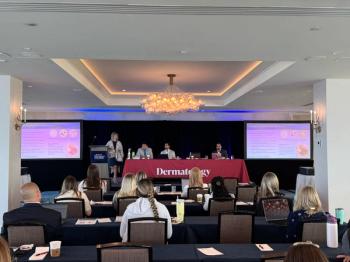
Harrison Nguyen, MD, shares groundbreaking insights on CSU, vasculitis, and bullous diseases at the SDPA Fall 2025 conference, enhancing dermatologic education.
Advertisement
“It's been full of really good learning, and it really highlights the importance of lifting up our field, so that any clinician who interacts with patients feels empowered to take care of dermatological conditions, not just the simple ones, but the more challenging ones, and to understand the science innovation that's happening in our field,” he said.
In his session on chronic spontaneous urticaria (CSU), Nguyen highlighted recent advances in understanding the immunologic drivers of this mast cell–mediated disorder.1 While IgE cross-linking (Type I) is the classical pathway, he noted that IgG-mediated activation (Type IIb) also plays a critical role. This dual-pathway mechanism helps explain the variable therapeutic responses observed with antihistamines and omalizumab. Furthermore, Nguyen underscored the importance of viewing CSU within the broader context of type 2 inflammation, which opens doors for more targeted and effective treatment approaches.
Discussing cutaneous vasculitis, Nguyen demystified what is often considered a daunting diagnosis.2 He encouraged clinicians to “put on their detective hats,” recognizing vasculitis as a reactive pattern rather than a disease itself. The key, he explained, lies in identifying underlying causes—whether infectious, autoimmune, or neoplastic—while remembering that most cases of cutaneous small vessel vasculitis are benign and self-limited. Symptomatic management and reassurance often suffice once serious systemic associations are excluded.
Finally, in his bullous disease lecture, Nguyen provided a detailed review of the basement membrane zone and its role in autoimmune blistering disorders.3 He discussed how the level of epidermal separation guides diagnosis and classification. Proper biopsy technique is essential: one specimen from the blister edge for routine histology and another perilesional sample for direct immunofluorescence. He also reviewed serologic testing, disease monitoring, and emerging biologic therapies, including the promising role of dupilumab in bullous pemphigoid.
References
1. Narla S, Nguyen H, Patel G. Immunology of Disease States. Presented at: Society of Dermatology Physician Associates Fall 2025 Conference; November 5-9, 2025; San Antonio, Texas.
2. Nguyen, H. Advanced Breakout - Patterns in Red and Purple: Decoding Vasculitis in the Skin. Presented at: Society of Dermatology Physician Associates Fall 2025 Conference; November 5-9, 2025; San Antonio, Texas.
3. Nguyen, H. Advanced Breakout - From Basement Membrane to Bedside: The Science & Strategy of Bullous Diseases. Presented at: Society of Dermatology Physician Associates Fall 2025 Conference; November 5-9, 2025; San Antonio, Texas.
Advertisement
Related Content
Advertisement



Latest CME


Advertisement
Advertisement
Trending on Dermatology Times
1
How Emerging Androgenetic Alopecia Therapies Target DHT at the Scalp Level
2
Social Media Mythbusters: Beef Tallow
3
Dermatology Times Inaugural NP/PA Connect Cutaneous Oncology Workshop Kicks Off in Tampa
4
25 Years Later: Remembering September 11 Through the Lens of Dermatologic and Burn Care
5