

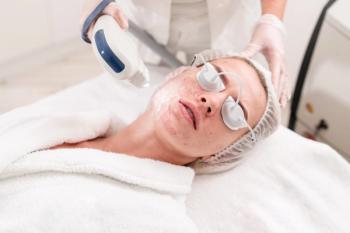
News|Articles|December 15, 2025
Clinical Evaluation of Bentonite and Alcea sulphurea Extract in the Management of Acne
Author(s)Marie Bosslett, Assistant Editor
Listen
0:00 / 0:00
Key Takeaways
- Bentonite clay and Alcea sulphurea extract offer a synergistic approach to acne management, addressing both comedogenic and inflammatory pathways.
- The clinical trial showed significant improvements in lesion counts and acne severity with the Bentonite–A. sulphurea mask compared to placebo.
A bentonite and Alcea sulphurea facial mask significantly improved acne severity and patient satisfaction in a recent clinical trial.
Advertisement
A new clinical trial has evaluated the therapeutic efficacy and patient acceptability of a novel facial mask combining Bentonite clay with Alcea sulphurea extract for the management of moderate acne vulgaris.1 The formulation, inspired by Traditional Persian Medicine (TPM), aims to leverage Bentonite’s sebaceous-absorbing and detoxifying properties alongside the anti-inflammatory, mucilaginous characteristics of A. sulphurea, offering a potential natural adjunct to conventional acne therapy.
Background
Bentonite, a smectite clay composed primarily of montmorillonite, has long been used in dermatologic formulations for its absorbent, adsorptive, and mild exfoliative properties. Its layered structure enables high cation-exchange capacity, allowing it to bind lipids, bacteria, and impurities from the skin surface. These characteristics make it clinically relevant in reducing excess sebum—a key contributor to follicular occlusion in acne—while simultaneously providing a soothing effect due to its mineral-rich profile.
Alcea sulphurea (yellow hollyhock), a traditional Persian medicinal plant, contains mucilage, polysaccharides, flavonoids, and phenolic compounds that confer anti-inflammatory, emollient, and wound-healing benefits. The mucilaginous fraction helps maintain epidermal hydration and barrier function, potentially mitigating irritation and erythema associated with inflammatory lesions.2 The combination of an oil-absorptive clay with a hydrating, anti-inflammatory botanical extract is thus mechanistically synergistic, addressing both comedogenic and inflammatory pathways central to acne pathogenesis.
Methods & Materials
A total of 60 patients aged ≥12 years with moderate acne, defined by the Global Acne Grading System and a total lesion count (TLC) of 20 to 50, were enrolled in this randomized, controlled add-on clinical trial from October 2022 to November 2023. Participants were randomized to receive either a Bentonite–A. sulphurea mask plus oral azithromycin 250 mg, or a placebo gel plus azithromycin. Both topical products were applied nightly for 8 weeks and washed off after 10 minutes.
The intervention formulation contained a 10% hydroalcoholic extract of A. sulphurea mixed with cosmetic-grade Bentonite in a 1:1 ratio and underwent microbial testing. Primary outcomes (changes in TLC and Acne Severity Index) were assessed at baseline, week 4, and week 8 by a single blinded investigator. Secondary outcomes included patient satisfaction measured via a visual analog scale.
Results
The intervention group demonstrated substantially greater improvements in all primary outcomes compared with placebo. From baseline to week 8, TLC decreased by a mean of 55.45% ± 21.74% in the intervention group versus 21.74% ± 14.74% in the placebo group (p < 0.001). ASI decreased by 66.33% ± 27.15% with the mask compared with 27.15% ± 15.42% in the placebo arm (p < 0.001). Significant reductions in both TLC and ASI were evident by week 4 and continued through week 8. Conversely, improvements in the placebo group plateaued after week 4.
Patient satisfaction reflected these clinical gains. In the intervention group, 43.3% reported being “very satisfied,” compared with only 3.3% in the placebo group. Dissatisfaction was far more common in the placebo group (53.3% somewhat or very dissatisfied vs. 3.3% in the intervention group). The authors inferred that the pleasant application experience and absence of major adverse events likely contributed to higher acceptance. Only mild transient irritation was reported, predominantly in the placebo arm (10%).
Conclusion
Some significant limitations include the modest sample size, short duration of follow-up, and incomplete blinding due to differences in product texture. The 8-week timeframe also limits long-term relapse rates or safety results. Larger, longer, and fully blinded trials—with placebo formulations matched in texture—are warranted to validate these findings and explore mechanisms of action.
In conclusion, this add-on trial suggests that a Bentonite–A. sulphurea mask is a safe, well-tolerated, and efficacious adjunct to oral azithromycin in patients with moderate acne vulgaris. The substantial improvements in lesion counts, acne severity, and patient satisfaction point to a promising role for TPM-derived formulations as complementary options in contemporary acne management.
“This study extends the scope by integrating an herbal extract with anti-inflammatory properties [and] paves the way for more innovative and patient-friendly formulations,” the authors concluded.
References
1. Salimi S, Fakhri M, Saeedi M, et al. The Therapeutic Effects of a Bentonite-Based Facial Mask With Alcea sulphurea Extract on Acne Severity and Patient Experience: Add-On Randomized Controlled Clinical Trial. J Cosmet Dermatol. 2025;24(12):e70586. doi:10.1111/jocd.70586
2. Mert, T., Fafal, T., Kıvçak, B., & Öztürk, H. T. (2010). Antimicrobial and Cytotoxic Activities of the Extracts Obtained from the Flowers of Alcea Rosea L. Hacettepe University Journal of the Faculty of Pharmacy, (1), 17-24.
Advertisement
Related Content
Advertisement


Advertisement
Advertisement
Trending on Dermatology Times
1
Biologic Therapy Linked to Lower 10-Year MACE Risk Across Racial Groups in Psoriasis
2
Former CDC Director Robert Redfield Joins Turn Therapeutics as Chief Scientific Officer
3
Body Weight, Not BMI, Associated With Brodalumab Response Trajectory in Plaque Psoriasis
4
FDA Grants QRX003 Rare Pediatric Disease Designation in Peeling Skin Syndrome
5