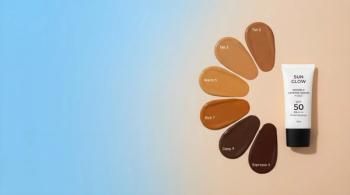
Though convenient, SPF-infused cosmetics rarely deliver their labeled protection level in real-world use, underscoring the continued need for a dedicated broad-spectrum sunscreen as the foundation of any routine.
Data presented at the American Academy of Dermatology 2022 Annual Meeting shows what supplements can and cannot manage alopecia areata.
With just 46 studies containing the key words “supplements hair loss” from 2021 and 2022 on a PubMed search,1 it is clear that there is more to be investigated on the efficacy of oral supplements in preventing hair loss. In a presentation at the American Academy of Dermatology 2022 Annual Meeting,2 Antonella Tosti, MD, Fredric Brandt Endowed Professor of Dermatology and Cutaneous Surgery at the University of Miami in Florida and president of the American Hair Research Society, laid out insights into what supplements can and cannot do to help manage alopecia areata (AA), androgenetic alopecia (AGA), and telogen effluvium (TE).
In a follow-up interview with Dermatology Times®, Tosti said, “Supplements are not treatments.” She added that the evidence to support their efficacy is doubtful; in a 2019 review,1 she and her coauthors wrote that “large, double-blind, placebo-controlled trials are required to determine the effect of micronutrient supplementation on hair growth in those patients with both micronutrient deficiency and nonscarring alopecia to establish any association between hair loss and micronutrient deficiency.”3 Tosti believes research conducted since the publication of the review has not clarified the picture, especially as it pertains to the role of iron, folate, vitamin B12, and zinc in managing AA, AGA, or TE.
However, Tosti noted, which is not to say that supplements don’t offer some benefits. “Supplements may prevent AA and may possibly prevent or halt AGA, but neither of those conclusions is evidence-based. They can halt TE, but only in case of deficiencies,” she said.
She also cited misinformation as a major issue with supplementation. “I often see patients taking supplements that contain ingredients that are not useful and can even worsen hair loss, such as vitamin A. Patients often take biotin and are not informed that it can affect blood test results. Supplements can cause [adverse] effects, and people often don’t know,” she noted.
Tosti remains a supplement skeptic. “This is a misconception, confusing supplements and effective treatments,” she told Dermatology Times®.
Disclosures:
Tosti listed the following relevant disclosures: DS Laboratories, Eli Lilly and Company, Monat Global, Pfizer, Springer Science + Business Media, Taylor & Francis, and Thirty Madison.
References:
1. Search for hair loss articles. https://pubmed.ncbi.nlm.nih.gov/?term=supplements+hair+loss&filter=years.2021-2022.
2. Almohanna HM, Ahmed A A, Tsatalis JP, Tosti A. The role of vitamins and minerals in hair loss: a review. Dermatol Ther (Hei-d elb). 2019;9(1):51-70. doi:10.1007/s13555-018-0278-6.
3. Ibrahim O and Tosti A. Do hair supplements work? Presented at: American Academy of Dermatology 2022 Annual Meeting; March 24-29, 2022; Boston, MA.
about 4 years ago
Managing Postpregnancy Hormonal Skin Issues in Breastfeeding Womenabout 4 years ago
Best Practices for Treating Stretch Marks in Pregnancyabout 4 years ago
Creating Diverse Teams Takes Work, But Is Worth the Effortabout 4 years ago
The Role of Nonprescription Products in the Management of Acneabout 4 years ago
Managing Atopic Dermatitis in Skin of Colorabout 4 years ago
Shin Guard Dermatitis: What's the Diagnosis?about 4 years ago
Add an Outpatient Infusion Center to Your Dermatology Practiceabout 4 years ago
Consider Mental Health Concerns in Teens With Acneabout 4 years ago
Microbiome Musings