

Opinion|Videos|June 20, 2024
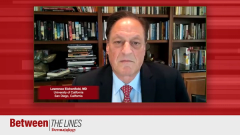
Atopic Dermatitis Treatments Before and After Initiation of Ruxolitinib Cream: Analysis of a US Payer Claims Database
Author(s)Lawrence Eichenfield, MD
Lawrence Eichenfield, MD, explores the significant comorbidities and conditions, such as allergic rhinitis, anxiety, and asthma, that intersect with atopic dermatitis (AD), discussing their influence on disease management and treatment response, as well as the observed treatment patterns of patients with this condition before and after the initiation of ruxolitinib therapy.
Advertisement
Episodes in this series

Video content above is prompted by the following question(s):
- How might conditions such as allergic rhinitis, anxiety, and asthma intersect with AD in terms of disease management and treatment response?
- Can you summarize the treatment patterns observed in this study before and after initiation of ruxolitinib cream, including the utilization of other topical and systemic therapies?
- Considering the baseline therapies used by patients prior to initiating ruxolitinib cream, does the distribution align with what you would expect in this patient population?
- Are there any specific patterns or trends in baseline therapy utilization that you find noteworthy or unexpected from this study?
Advertisement
Related to this article

A single subcutaneous dose led to a 4-point or greater itch reduction in 82% of patients with chronic pruritus at week 12 vs 22% with placebo, Attovia reported.

Pediatric dermatologists outline how to evaluate suspected topical steroid withdrawal, exclude mimics, and preserve family trust in eczema care.

Diego Ruiz Dasilva, MD, and Lindsey Finklea, MD, discuss the burden of chronic inducible urticaria and phase 3 remIND findings for remibrutinib.
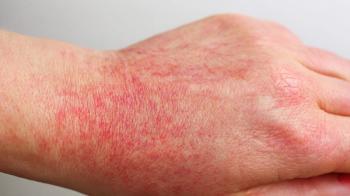
Atopic dermatitis care is evolving with flexible biologic dosing, expanded pediatric options, and novel oral, topical, and systemic therapies.

ATI-052 improved disease severity and itch in a phase 1b trial of patients with severe atopic dermatitis, with no grade 3 or 4 adverse events.
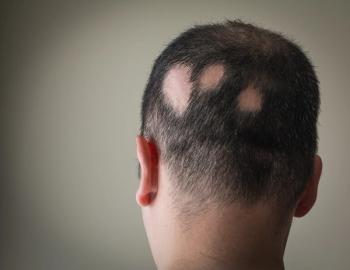
The September issue highlights advances in alopecia areata, cosmetic SPF, psoriasis treatment, teledermatology, and atopic dermatitis.
Two-year oral IL-23 data, GLP-1 biomarker findings, and a nonsurgical option for superficial basal cell carcinoma headline the sessions covered in Las Vegas.
Advertisement
Advertisement
Trending on Dermatology Times
1
Don't Be Rash: Navigating Topical Steroid Withdrawal Concerns in Pediatric Eczema
2
AADA Warns of 6% Medicare Payment Cut for Dermatologists in 2027
3
ATTO-1310 Reduces Itch at Week 12 in Chronic Pruritus and Atopic Dermatitis
4
Where Patients With Alopecia Areata Fit on the Path to Systemic Treatment
5