


Opinion|Videos|April 8, 2024
Acknowledging Opportunities for Further Research in AD Management
Author(s)David Rosmarin, MD
David Rosmarin, MD, acknowledges opportunities for further research in diverse populations to continue updating AD treatment guidelines.
Advertisement
Episodes in this series




In the Dermatology Times Expert Perspectives series "Advancements in Atopic Dermatitis: Insights from the 2024 Masterclasses in Dermatology Conference," leading dermatologists discuss the advancements in treatments and data for atopic dermatitis (AD) with hand-foot involvement, diversity in clinical trials, and pearls from the American Academy of Dermatology's (AAD) AD treatment guidelines.
In this episode, David Rosmarin, MD, of Indiana University in Indianapolis, acknowledges opportunities for further research in diverse populations to continue updating AD treatment guidelines.
Advertisement
Related to this article

SYX-5219 improved disease severity and itch in a Phase 1b trial of adults with moderate to severe atopic dermatitis.

Christophe Piketty discusses 3-year ARCADIA data demonstrating sustained efficacy and long-term safety of nemolizumab in atopic dermatitis.
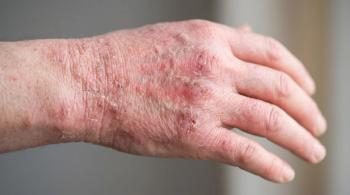
No skin lesion flares were observed through 16 weeks after switching from dupilumab to upadacitinib; itch flares occurred in 3.6% to 4.8% of patients with baseline WP-NRS scores of 6 or lower.

Three-year ARCADIA LTE data show sustained skin clearance and itch control with nemolizumab in moderate-to-severe atopic dermatitis.

Upadacitinib showed broader inflammatory effects and earlier skin barrier restoration than dupilumab in atopic dermatitis.
Advertisement
Advertisement
Trending on Dermatology Times
1
Social Media Mythbusters: Can Castor Oil Really Grow Hair?
2
EADV 2026 Atopic Dermatitis Highlights: Tilrekimig, RAC2 Inhibition, and Level Up Data
3
FDA Approves Pritelivir for Refractory Mucocutaneous HSV in Immunocompromised Adults
4
GLP-1 Agonists Address Metabolic Risk in Psoriatic Disease
5