

Gender and sex play a part in detemining which topical products are most successful for patients. This table is compiled based on a review of articles form the International Journal of Women's Dermatology.
Gender and sex play a part in detemining which topical products are most successful for patients. This table is compiled based on a review of articles form the International Journal of Women's Dermatology.
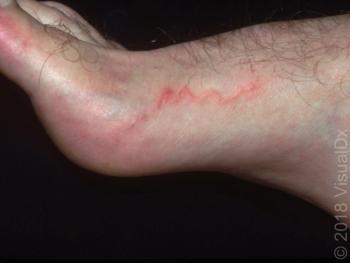
Pruritic skin lesions on the foot and lower leg that look like red lines in a serpiginous configuration. What’s your diagnosis?

A nodule develops over the course of months with pain, swelling, distal numbness and muscle weakness. What’s your diagnosis?

AIVITA Biomedical, a biotech firm that focuses on regenerative medicines such as stem cell applications, recently named two new members to its senior management team.
Two dermatology practices join forces to deliver excellent treatment options to patients in El Paso, Texas.

The FDA has approved Ortho Dermatologic’s new drug application for Altreno (tretinoin 0.05 percent) lotion for the treatment of acne vulgaris.

Two dermatology firms combine to improve their medical and cosmetic dermatology services, existing treatments and procedures.

Kleresca's new biophotonic technology received CE mark of approval, which will allow it to expand in the U.S., Canada, Australia and throughout Europe.

Multiple burning, painful skin lesions appear on the legs the morning after a walk in the woods. What’s your diagnosis?

An 18-year-old girl with small widespread, itchy brown macules primarily on her trunk. What’s your diagnosis?

Effective therapeutic protocols for acne scarring should consider the multifacted aspects of scarring, such as erythema (redness), signs of bacterial infection, signs of atrophic scars and whether the scars are generalized or individualized.
In this slideshow, we highlight some of the most innovative and important clinical advances in the treatment of atopic dermatitis.

The FDA is exploring ways to prevent long-term drug shortages and allow more drug importation so patients have access to medically necessary drugs.
Physicians throughout the country are recruiting patients for two phase three clinical trials of cantharidin for the treatment of molluscum contagiousum. a viral skin condition.
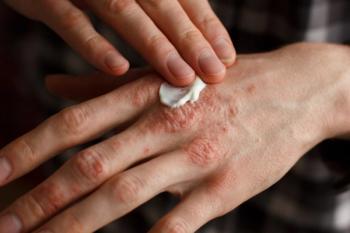
Ortho Dermatologics announced in August that it resubmitted a new drug application to the FDA for DUOBRIITM1, a lotion for the treatment of plaque psoriasis.
PharmaTimes reported in August that the Spanish company Almirall acquired Allergan’s U.S. dermatology portfolio for $650 million.
In October, the Food and Drug Administratin is expected to decide on the approval of omadacycline (Paratek Pharmaceuticals) for the treatment of acute bacterial skin and skin structure infections, and community-acquired bacterial pneumonia.

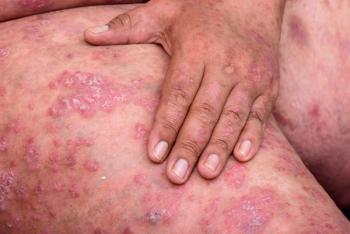
In this slideshow, we highlight some of this year's clinical advances in psoriasis and plaque psoriasis.

The European Academy of Dermatology and Venerology (EADV) 2018 meeting takes this week in Paris. Visit our EADV conference news site to follow the developments from Paris.
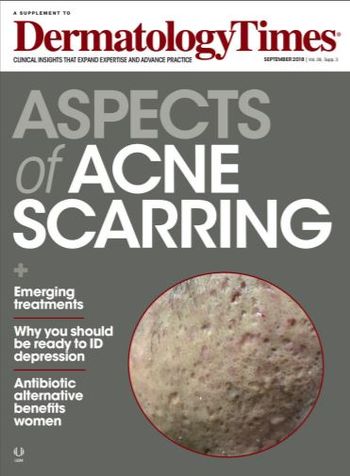
The September 2018 issue of Dermatology Times includes a special supplment on treating acne scarring. It highlights some of the latest advances in treating patients who suffer from this condition.
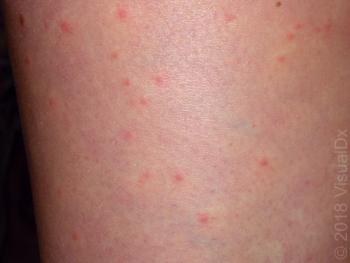
A 52-year-old man presents with a severe headache and widespread rash after a camping trip. What's your diagnosis?

Survey offers insights on the future of healthcare costs - and your role as providers

This month we feature new products from MiraDry, Qosmedix, Rekze and Syneron Candela for conditions ranging from underarm sweating to rosacea and cellulite.

The August issue of Dermatology Times includes a supplement edition that focuses on a patient-centered approach in psoriasis management, including an article on the importance of longer consults in the doctor's office and recommendations for individualized therapy. Read more here.
A Johns Hopkins study finds that physicians who use stigmatizing language in their patients' medical records, may actually be hurting the care those patients get for years to come.
In June, the European Commission approved tofacitinib citrate (Xeljanz/Pfizer) 5 mg twice daily in combination with methotrexate for adults with psoriatic arthritis. Learn about the parameters here.

In June, Dermira Inc. announced the FDA approval of Qbrexza (glycopyrronium) for primary axillary hyperhidrosis ― excessive underarm sweating.

The July issue of Dermatology Times highlights some newly approved treatments in dermatology including a new wrinkle filler and new treatment for seborrheic keratosis.