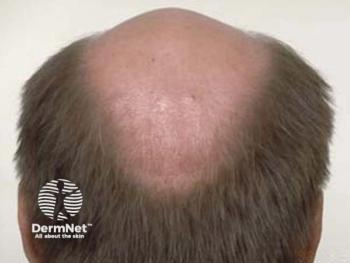
Three experimental hair loss mechanisms are moving through late-stage trials for the first time in decades, and the data are worth knowing before patients ask.
Sponsored by Sun Pharmaceutical Industries, Inc.
Treatment of locally advanced basal cell carcinoma (laBCC) is complex and often requires a multidisciplinary approach.1 Mohs surgery—the traditional first-line treatment—or radiation therapy may not be an option for certain laBCC lesions.1,2 This could be due to invasion into local tissue or lesion location near anatomically sensitive areas.2 Multiple lesions, and the reconstruction that follows their removal, can be difficult3—another reason that surgery may not be the preferred treatment approach.
Patient perspectives are part of the therapeutic equation. Surgery for lesions in sensitive areas like the nose, mouth, or eyes may give rise to cosmetic concerns.4 Based on a 1-year prospective study of patients undergoing Mohs surgery, certain populations reported higher appearance-related psychosocial distress.5,*
Surgical fatigue may come into play for patients who have undergone several Mohs surgeries. Recovery burden is another consideration—some patients and their caregivers may not be equipped to handle the diligent wound care that recovery from surgery requires.
When developing a therapeutic approach for patients in these scenarios, consideration is given to the increasing evidence for the efficacy of hedgehog pathway inhibitors (HHIs) in the treatment of laBCC lesions.2 We’ll look at the efficacy of a particular HHI, ODOMZO® (sonidegib), as well as safety learnings from clinical experience.
INDICATION
ODOMZO® (sonidegib) is indicated for the treatment of adult patients with locally advanced basal cell carcinoma (BCC) that has recurred following surgery or radiation therapy, or those who are not candidates for surgery or radiation therapy.
SELECTED IMPORTANT SAFETY INFORMATION
WARNING: EMBRYO-FETAL TOXICITY
Please see additional Important Safety Information below.
HHI efficacy: the BOLT trial
HHIs are therapies that bind to and inhibit cancer-driving proteins.6,7 Sonidegib was introduced in 2015 as a targeted systemic therapy for the treatment of laBCC.6 It garnered FDA approval based on results from a multicenter (58 centers, 12 countries), randomized, double-blind, Phase 2 study evaluating once-daily dosing of ODOMZO in 194 patients with laBCC. Patients were randomized 1:2 to the 200 mg or 800 mg dose.6,8,†
The main efficacy outcome measure of the trial was objective response rate (ORR) as determined by blinded central review, according to modified Response Evaluation Criteria In Solid Tumors (mRECIST) for patients with laBCC. Duration of response, determined by blinded central review, was a key secondary outcome measure.6
The BOLT trial set a new standard when evaluating laBCC. ODOMZO is the sole HHI for which the pivotal trial used the stringent mRECIST criteria.9,10 Nearly 6 out of 10 patients saw their laBCC lesion(s) shrink by half or more.6,8
One patient’s experience with ODOMZO
Patient example: Lesions on or near the nose11
BASELINE
• ODOMZO 200 mg initiated daily
WEEKS 12-24
• Notable improvement in ulceration and weeping (WEEK 12)
• Lesion healing with only small stellate ulceration (WEEK 24)
WEEK 48
• Resolved ulceration
• Small pearly 9 mm papule remaining
WEEK 60
• Apparent clinical resolution with smooth skin
• No telangiectasias or pearly papules
• Notable alar notch from scarred healing of lesion
Targeting the lesion: a crucial factor in decision-making
The ultimate goal is to target and completely remove a tumor with minimal impact when treating any BCC.12 The targeted therapeutic benefit of ODOMZO for patients with laBCC comes from its lipophilic nature and concentration in the tissue.6 Lipophilicity enhances its volume of distribution (~9166 L) and accumulation (~19-fold at steady state), allowing it to deliver deep tissue penetration at the site of the lesion.6,13 Its concentration in the tissue is 6 times higher than in the plasma—another factor in the targeting of laBCC.6,13
The ~28-day half-life of ODOMZO is also noteworthy, delivering lasting therapeutic effects.6
Duration of response (DoR)
Duration of response was a key secondary outcome measure in the BOLT trial. The results give information about the long-term efficacy of ODOMZO6,8:
Manageable adverse reactions (ARs)
For the patient facing laBCC treatment, as well as for their physician, ARs are a concern. In the BOLT trial, more than 95% of the most common ARs were mild or moderate (Grade 1 or 2).6
The most common ARs occurring in ≥10% of patients were muscle spasms (54%), alopecia (53%), dysgeusia (46%), fatigue (41%), nausea (39%), musculoskeletal pain (32%), diarrhea (32%), decreased weight (30%), decreased appetite (23%), myalgia (19%), headache (15%), pain (14%), vomiting (11%), and pruritus (10%).6
Among the most common ARs reported, none were Grade 4 and less than 5% were severe.6,11 Proper monitoring and guidance can help patients prepare for and address ARs if they arise.14
Long-term disease control
Recent developments in targeted systemic therapies, including HHIs, have transformed the management of laBCC and offer novel treatment modalities for patients.2 Balancing effective laBCC treatment with the patient’s unique goals and concerns often requires a multidisciplinary approach.1,15
As a once-daily oral HHI, ODOMZO has a 10-year track record as an effective, noninvasive alternative for patients with surgical fatigue, cosmetic concerns, or those who are not appropriate for radiation or surgery.4,6 It can provide, as needed, a safe, tolerable, and practical option for the long-term management of laBCC.6,11
For more information about ODOMZO, including resources for healthcare professionals, please visit
IMPORTANT SAFETY INFORMATION (continued)
WARNINGS AND PRECAUTIONS
Embryo-fetal Toxicity: ODOMZO can cause embryo-fetal death or severe birth defects when administered to a pregnant woman. Females of Reproductive Potential: Verify pregnancy status prior to initiating ODOMZO. Advise females to use effective contraception and not to breastfeed, due to the potential for serious adverse reactions in breastfed infants, during treatment and for at least 20 months after the last dose. Report pregnancies to Sun Pharmaceutical Industries, Inc. at 1-800-406-7984.
Males: Advise males to use condoms, even after a vasectomy, and to not donate semen during treatment and for at least 8 months after the last dose to avoid potential drug exposure in pregnant females or females of reproductive potential.
Blood Donation: Advise patients not to donate blood or blood products while taking ODOMZO, and for at least 20 months after the last dose because their blood or blood products might be given to a female of reproductive potential.
Musculoskeletal Adverse Reactions: Musculoskeletal adverse reactions, which may be accompanied by serum creatine kinase (CK) elevations, occur with ODOMZO and other drugs which inhibit the hedgehog (Hh) pathway. Obtain serum CK and creatinine levels prior to initiating therapy, periodically during treatment, and as clinically indicated. Temporary dose interruption or discontinuation of ODOMZO may be required based on the severity of musculoskeletal adverse reactions.
Premature Fusion of the Epiphyses: ODOMZO is not indicated for use in pediatric patients. Premature fusion of the epiphyses has been reported in pediatric patients exposed to ODOMZO and other Hh pathway inhibitors. In some cases, fusion progressed after discontinuation.
Drug Interactions: Avoid concomitant administration of ODOMZO with strong and moderate CYP3A inhibitors. If a moderate CYP3A inhibitor must be used, administer for less than 14 days and monitor closely for adverse reactions, particularly musculoskeletal. Avoid concomitant administration of ODOMZO with strong and moderate CYP3A inducers.
Geriatric Use: There was a higher incidence of serious adverse events, Grade 3 and 4, and events requiring dose interruption or discontinuation in patients ≥65 years compared with younger patients; this was not attributable to an increase in any specific adverse event.
Most Common Adverse Reactions: The most common adverse reactions occurring in ≥10% of patients were muscle spasms (54%), alopecia (53%), dysgeusia (46%), fatigue (41%), nausea (39%), musculoskeletal pain (32%), diarrhea (32%), decreased weight (30%), decreased appetite (23%), myalgia(19%), abdominal pain (18%), headache (15%), pain (14%), vomiting (11%), and pruritus (10%).
BOLT=Basal cell carcinoma Outcomes with LDE225 Treatment. (LDE225 was the investigative term for sonidegib); CI=confidence interval; FDA=Food and Drug Administration; NR=not reached.
* Based on the FACE-Q® Skin Cancer appearance-related psychosocial distress questionnaire completed by 217 patients (at baseline) who had Mohs surgery for facial nonmelanoma skin cancer between September 2020 and October 2021.
† All modalities used must have demonstrated absence of tumor to achieve a composite assessment of complete response (CR). Partial response (PR) is defined as ≥50% decrease in the sum of the product of the diameters (SPD) of the lesions by photo assessment and ≥30% decrease in the sum of diameters of lesions per magnetic resonance imaging.6,8
References:
1. Gupta N, Ruiz ES. Current perspectives in the treatment of locally advanced basal cell carcinoma. Drug Des Devel Ther. 2022;16:183-190.
2. Burshtein J, Schlesinger T. Managing advanced basal cell carcinoma: a guide for the dermatology clinician. J Clin Aesthet Dermatol. 2025;18(3):21-27.
3. Kim GW, Bae YC, Bae SH, Nam SB, Lee DM. A clinical review of reconstructive techniques for patients with multiple skin cancers on the face. Arch Craniofac Surg. 2018;19(3):194-199.
4. de Giorgi V, Trane L, Pieretti G, et al. Treatment of periocular advanced basal cell carcinoma with Hedgehog pathway inhibitors: a single-center study and a new dedicated therapeutic protocol. Dermatol Reports. 2021;13(3):9240.
5. D’Hondt V, Veldhuizen IJ, Theelen FFM, et al. Appearance-related psychosocial distress after facial non-melanoma skin cancer surgery: a 1-year prospective study. Psychooncology. 2023;32(7):1114-1121.
6. ODOMZO [prescribing information]. Cranbury, NJ: Sun Pharmaceutical Industries, Inc; 08/2023.
7. Nicheperovich A, Townsend-Nicholson A. Towards precision oncology: the role of smoothened and its variants in cancer. J Pers Med. 2022;12(10):1648.
8. Lear JT, Migden MR, Lewis KD, et al. Long-term efficacy and safety of sonidegib in patients with locally advanced and metastatic basal cell carcinoma: 30-month analysis of the randomized phase 2 BOLT study. J Eur Acad Dermatol Venereol. 2018;32(3):372-381.
9. Erivedge® (vismodegib) capsule Prescribing Information. Genentech, Inc. March 2023.
10. Dummer R, Guminski A, Gutzmer R, et al. The 12-month analysis from Basal Cell Carcinoma Outcomes with LDE225 Treatment (BOLT): a phase II, randomized, double-blind study of sonidegib in patients with advanced basal cell carcinoma. J Am Acad Dermatol. 2016;75(1):113-125.e5.
11. Data on file. Sun Pharmaceutical Industries, Inc. Princeton, NJ.
12. AIM at Skin Cancer Foundation. How BCC is treated. Accessed March 5, 2026. https://aimatskincancer.org/basal-cell-carcinoma/bcc-treating-treatment-options/
13. Gutzmer R, Loquai C, Robert C, et al. Key clinical adverse events in patients with advanced basal cell carcinoma treated with sonidegib or vismodegib: a post hoc analysis. Dermatol Ther (Heidelb). 2021;11(5):1839-1849.
14. Dessinioti C, Plaka M, Soura E, et al. A practical guide for the follow-up of patients with advanced basal cell carcinoma during treatment with hedgehog pathway inhibitors. Oncologist. 2019;24(8):e755-e764.
15. Krakowski AC, Hafeez F, Westheim A, Pan EY, Wilson M. Advanced basal cell carcinoma: what dermatologists need to know about diagnosis. J Am Acad Dermatol. 2022;86(6S):S1-S13.
ODOMZO is a registered trademark of Sun Pharmaceutical Industries Limited.
All other trademarks are the property of their respective owners.
© 2026 Sun Pharmaceutical Industries, Inc. All rights reserved.
PM-US-ODZ-0903 04/26