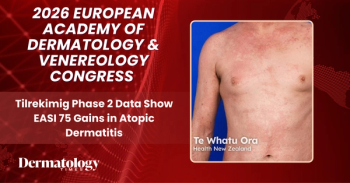
According to data presented at EADV, at week 16 of the phase 2 study, 47.8% to 62.5% of adults receiving tilrekimig achieved EASI 75 across doses, compared with 9.1% to 19.9% with placebo.
In this month's Clinical Considerations, we take a look at biologics and treatments for seborrheic keratoses.
Joe Gorelick, MSNDear Colleagues,
In this month's Clinical Considerations, we take a look at biologics and treatments for seborrheic keratoses.
Long term control is important for chronic diseases. Therefore more data is needed to help achieve optimal control. This article elucidates findings from atopic dermatology experts regarding the importance of maintaining high levels of disease control over time. Specifically they discuss the use of topical agents for patients being treated with the biologic Dupixent as one effective strategy.
There are multiple biologic agents available today for the treatment of Psoriasis. How do you choose which agent or pathway to target when initiating therapy? Patients with psoriasis want to have the clearest skin possible. It is up to us to choose the safest treatment while still providing the most effective agent for our patients. The medial history of your patients will influence your decision. This
Not a day goes by that we do not see an SK. While clinically insignificant to us, recent data shows that they do concern patients. Patients seeking treatment for SKs are presented with limited treatment options--liquid nitrogen, electrocautery, and curettage to name a few. All of these modalities carry a risk of leaving a mark. Is there a better way? An investigational agent is on the horizon that may yield a better cosmetic result than our current modalities.
Best,
Joe Gorelick, MSN, FNP-C, Dermatology Education Foundation Founder and Chairman