Tina Bhutani-Jacques, MD, explored how disease location, prior treatment response, and patient preference shape topical treatment decisions across 3 plaque psoriasis cases.
A new study revealed that psoriasis patient adherence is influenced by certain characteristics of topical medications.
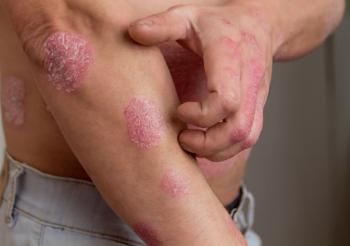
While topical therapies continue to be a mainstay of psoriasis treatment, patient adherence is dependent on several characteristics of the medications, according to a new study.1
Researchers at the center for dermatology research in the Department of Dermatology at Wake Forest School of Medicine in Winston-Salem, North Carolina, conducted the study to better understand patient perspectives when it comes to experience, expectations, and preferences.
To do so, they analyzed results from The National Psoriasis Foundation’s 17- question survey conducted in March 2022, which assessed symptoms, treatment modalities, frequency of tropical therapy use, and vehicle preferences.
Of the 411 patients surveyed, 83.9% self-reported moderate psoriasis. 10.2% reported their psoriasis as severe, 5.4% reported it as mild and 0.5% reported it as very severe, with the most affected areas being the scalp (67.9%), arms/elbows ( 62.8%), trunk (61.6%) and hands/feet (40.6%).
Patient Preference
Many participants (76%) reported using topical therapy at least once weekly. Nearly 80% of participants said they would allow 2 weeks for a medication to become effective before stopping it. Participants preferred water-based creams (75.7%), followed by oil-based foam (70.8%), gel (48.7%), solution (42.8%), lotion (21.2%), non-oil-based foam (17.5%), ointment (16.5%), and spray (6.3%).
The formulation attributes rated most important were application feel (55.2%), non-staining (49.9%), quick absorption (46.7%), non-sticky texture (39.7%), ease of application (28.5%), no unpleasant smell (22.4%), non-greasy (16.8%), works quickly (14.1%), absent sting or burn (10%), no adverse skin reaction (9.7%), and once daily treatment (6.8%). If participants did not like a topical treatment's formulation, 74.7%) aid they would discontinue the use of the treatment after a week. Additionally, more than 40% of patients said that they would contact another dermatologist if their topical medication caused a reaction.
Topical medications present a particularly unique burden for dermatology patients because they can be cumbersome, difficult to use, poorly tolerated, messy, and time-consuming. In a
First-line treatments for mild-to-moderate psoriasis are topical treatments, including corticosteroids, vitamin D analogs, keratinolytics, calcineurin inhibitors, salicylic acid, and tar.1
For moderate-to-severe psoriasis, the
References
1. Curcio A, Kontzias C, Gorodokin B, Feldman S, Kircik L. Patient Preferences in Topical Psoriasis Treatment. J Drugs Dermatol. 2023 Apr 1;22(4):326-332. doi: 10.36849/JDD.7372
2. How Dermatologists Diagnose and Treat Psoriasis. American Academy of Dermatology Association.