


From case reports to conference presentations, Stern outlines a practical path APPs can follow to build a profile beyond their day-to-day clinical role.
From case reports to conference presentations, Stern outlines a practical path APPs can follow to build a profile beyond their day-to-day clinical role.

AI analysis of 187,016 menopausal women links hair loss severity to thyroid disease, gut symptoms, scalp inflammation, and genetics, supporting broader diagnostic workups beyond hormones.

William Posten, MD, discusses outcomes, recurrence rates, and the importance of patient adherence in a combined surgical excision and radiation therapy protocol for keloids.

As Epiduo goes OTC, offering once-daily adapalene+BPO for mild to moderate acne, Heather Woolery-Lloyd, MD, FAAD, gives advice on irritation, purging, and simplifying routines.

The June issue of Dermatology Times highlights the latest advances in skin cancer, psoriasis, atopic dermatitis, hidradenitis suppurativa, and emerging dermatology technologies.

Put your dermatology expertise to the test with Dermatology Times’ interactive quiz series.

Translational Takeaways distills the most clinically relevant findings from emerging dermatology research into clear, practice-focused insights that inform real-world decision-making.

Can daily supplements "clear skin from within", or is it just a myth? Read more about the latest social media trend and learn how to counsel your patients in the clinic.
Elizabeth Buzney, MD, provides an overview of the mechanism of action, administration protocol, and clinical safety profile of afamelanotide for erythropoietic protoporphyria.
Lakshi M. Aldredge, MSN, ANP-BC, DCNP, discusses late-breaking data preseneted at SDNP on novel immune-mediated therapies for atopic dermatitis, alopecia areata, and hidradenitis suppurativa.

Suneel Chilukuri, MD, explains why acne care requires a holistic approach that treats both visible lesions and the "mental scarring" that affects patient self-confidence.
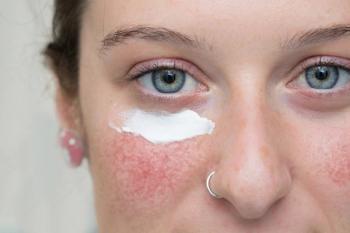
Plant-based oat oil and aloe moisturizer outperforms metronidazole in a 12-week trial, reducing rosacea redness and lesions safely without irritation.
Every week, we cut through the noise to bring clinicians the trial results, approvals, and emerging therapies that are actually moving the needle.
Learn why non-comedogenic moisturizers and hyaluronic acid support the skin barrier in acne patients, plus how patients can use benzoyl peroxide safely.

Deborah Sarnoff, MD, president of the Skin Cancer Foundation, discusses actinic keratosis detection, treatment, and clinician resources provided by the Skin Cancer Foundation.
As one of California's first derm PAs, Stern discusses the mentorship-driven private practice model that launched her career and its near-disappearance today.

Zoe Diana Draelos, MD, FAAD, discussed the clinical rationale for incorporating plant adaptogen-based skin care into rosacea management, including how an OTC serum performed alongside prescription therapies.
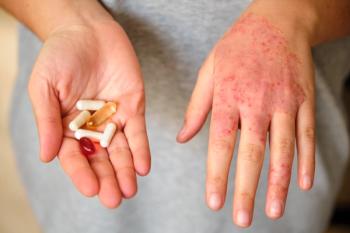
Oral peptide drugs move beyond injections, bringing targeted psoriasis therapy like icotrokinra and reshaping dermatology’s treatment options.
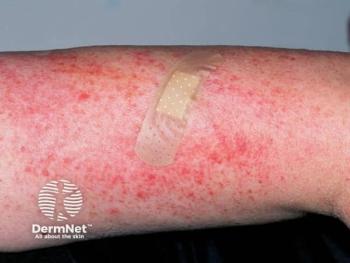
Phase 1/2 data from RESET-Myositis, RESET-SSc, and RESET-SLE presented at EULAR 2026 show durable immunomodulator-free responses and a consistent safety profile across indications.

Jared Gollob, MD, discusses phase 1b biomarker findings for KT-621, a STAT6 degrader in atopic dermatitis, presented at SID 2026.
Patients experiencing hormonal skin changes frequently report feeling unheard, and Doral Fredericks, PharmD, MBA, argues that active reassessment rather than attribution to aging is the clinical default that's needed.
Discover how tailored pre- and postmicroneedling care, plus lactobacillus exosome boosters, may speed healing, improve scars, and deliver safe, FDA-cleared results.
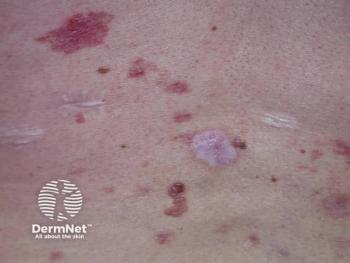
Medicus Pharma advances microneedle doxorubicin therapy to clear multiple Gorlin syndrome BCC lesions.
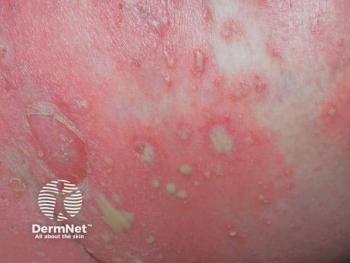
Experts recommend routine genital assessment as part of comprehensive skin exams rather than relying on patient-initiated reporting of this sensitive manifestation.

This review of the latest dermatological studies includes insights on PeakPASI in psoriasis severity, the future of digital derm lectures, negative pressure wound therapy, and more.
Miriam Pomerantz Kadosh, MSW, LCSW, director of education and patient engagement at the Melanoma Research Foundation, outlines free resources available to dermatology practices and communities.
Michael Gold, MD, explains why the brand's microneedling pen stands out, with customizable depth, speed, and cartridges for rejuvenation and acne-scar treatment credibility.
Organon's Doral Fredericks, PharmD, MBA, explains why pregnancy and menopause remain chronically understudied in dermatology research and what clinicians are missing as a result.

New IND pushes QRX003 toward first targeted therapy for peeling skin syndrome, with early pediatric results showing rapid healing and no safety issues.
Discover how oral GliSODin delivers SOD to boost skin defense, enhance retinoids, and reduce UV damage and dark spots—backed by clinical trials.